Table of Contents
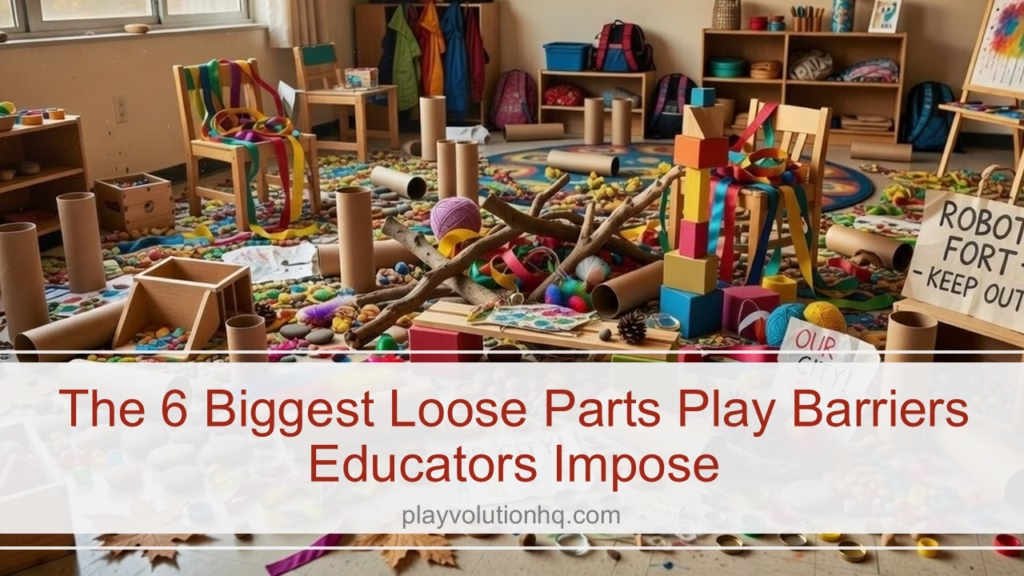
Loose parts play barriers inhibit children’s play and exploration. They make loose parts less loose. They act as a restrictor to choice, a governor to creativity, a roadblock to agency.
That said, the reasons behind them are often logical and deeply rooted in the daily realities of managing an early learning setting. Many early learning practitioners are unknowingly imposing these loose parts play barriers—often out of necessity, habit, or genuine concern.
My goal with this post is to shine a light on them to raise awareness and spark self-reflection. (We’ll dig into 5 Proven Ways To Increase Loose Parts Freedom In Your Classroom in an upcoming post.)
Let’s dig into those reasons adults—often unknowingly—create loose parts play barriers:
Mess and Cleanup Anxiety
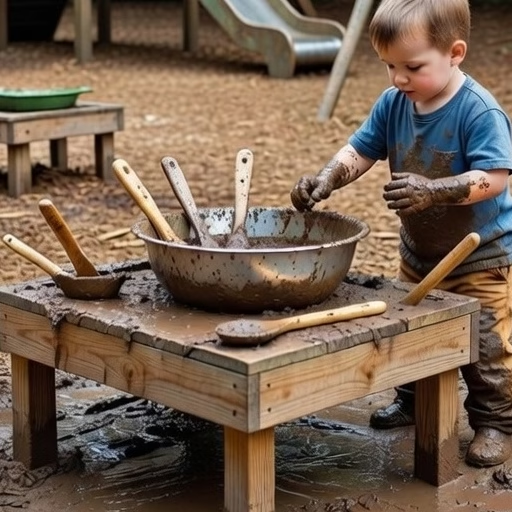
One of the most common loose parts play barriers is the anxiety that builds when children’s play gets messier. Bits and pieces scatter farther from where they started. Clean clothes end up covered in paint, mud, or that “magic potion” the kids brewed in the water table—crumbled leaves, smashed pine cones, and unidentified mystery ingredients.
Even early learning professionals who genuinely want to go with the flow and let kids play and explore as they see fit get pulled in by the growing mess and the ticking clock. To quiet the anxiety, they step in: limiting materials, restricting where they can go, and controlling how they can be used. Loose parts end up less loose.
Storage and Organization Nightmares
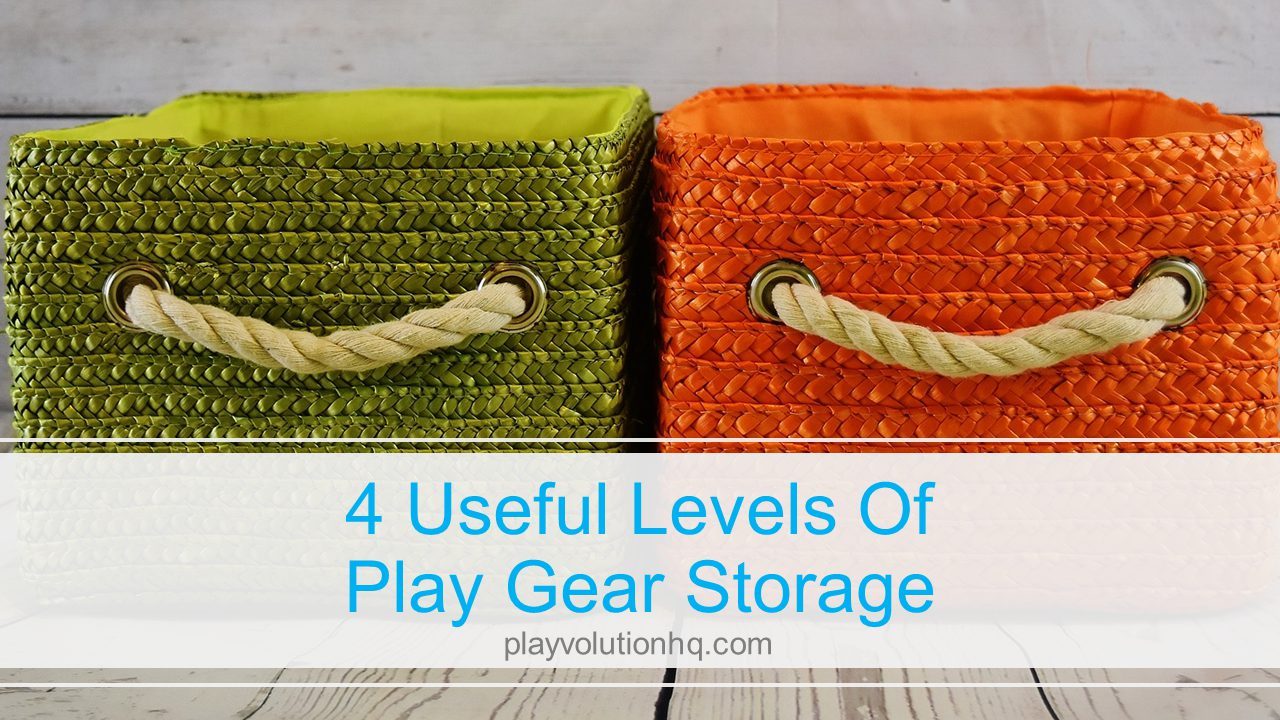
Lack of storage space and not knowing exactly how to organize disjointed collections of odds and ends is another big loose parts play roadblock. It feeds right into cleanup anxiety: “Where are we going to put all this junk so the place looks tidy when parents come?”
Early learning settings rarely have enough storage. The space they do have seldom gets the time it needs to stay organized—there’s always something more urgent pulling attention. Then add the nature of loose parts themselves: cumbersome shapes, odd sizes, often hard to neatly bin and label— storage nightmare territory.
The logical response? Don’t get out what you already have. Don’t add more to the collection. Both choices feel sensible in the moment, but they shrink the possibilities and make loose parts a lot less loose.
Dive deeper into the topic of storage with this post:
Programming Logistics
Cleanup time and equipment storage are just two of the programming logistics that can be loose parts play barriers. There are plenty of other daily programming realities that can hinder loose parts play when we allow them to:
- Staying On Schedule— Tight timelines and frequent transitions leave no buffer for extended, child-led play and exploration.
- Supervision Constraints—Robust loose parts play can feel like it requires more eyes than available; adults worry about keeping track of dynamic, unpredictable moveme
- Heath And Safety—For those new to managing loose parts, real or perceived risks (trips, small items, unstable builds) put the brakes on freer exploration.
- Meeting Curriculum Goals—Pressure to “hit” specific outcomes, document learning quickly, or fit adult-led lessons can sideline open-ended loose parts as an “extra” rather than core play.
- Documentation Demands—Finding time for required notes, photos, or portfolios is tough when the room is alive with loose parts activity and emergent discoveries.
While these are all legitimate concerns, they don’t have to limit children’s full and exuberant exploration of loose parts. Many programs find ways around these roadblocks
The “It Looks Like Garbage” Factor
Exuberant loose parts exploration often gets curtailed on aesthetic grounds. The play turns chaotic—cluttered spaces, materials everywhere. Many of the most popular items ( cardboard boxes, sticks, grass clippings, yogurt containers, corks) would literally be garbage if they weren’t salvaged and reclassified as “play things.”
To the untrained eye, it looks more like junk than brain-building, body-building super-toys. It’s easier for parents, coworkers, or visitors to see worksheets and circle-time caterpillar lessons as “real learning” than to recognize the deep thinking happening as kids turn a stack of empty Amazon (affiliate link) boxes into a stuffed animal castle.
In a busy classroom, caving to (or preempting) that “It Looks Like Garbage” mindset is simpler than educating stakeholders on the true value. Pinecones, old boards, castoff blankets, garden hose sections—they scream “junk” more than “learning opportunities” to many.
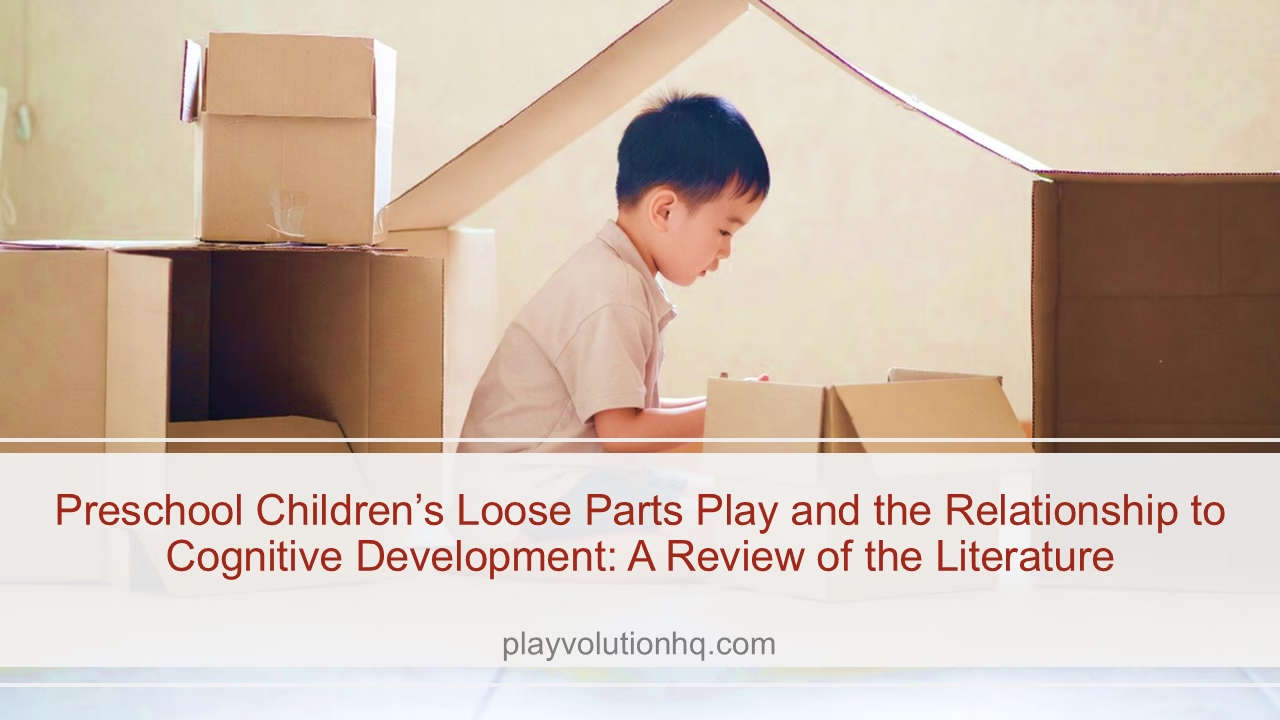
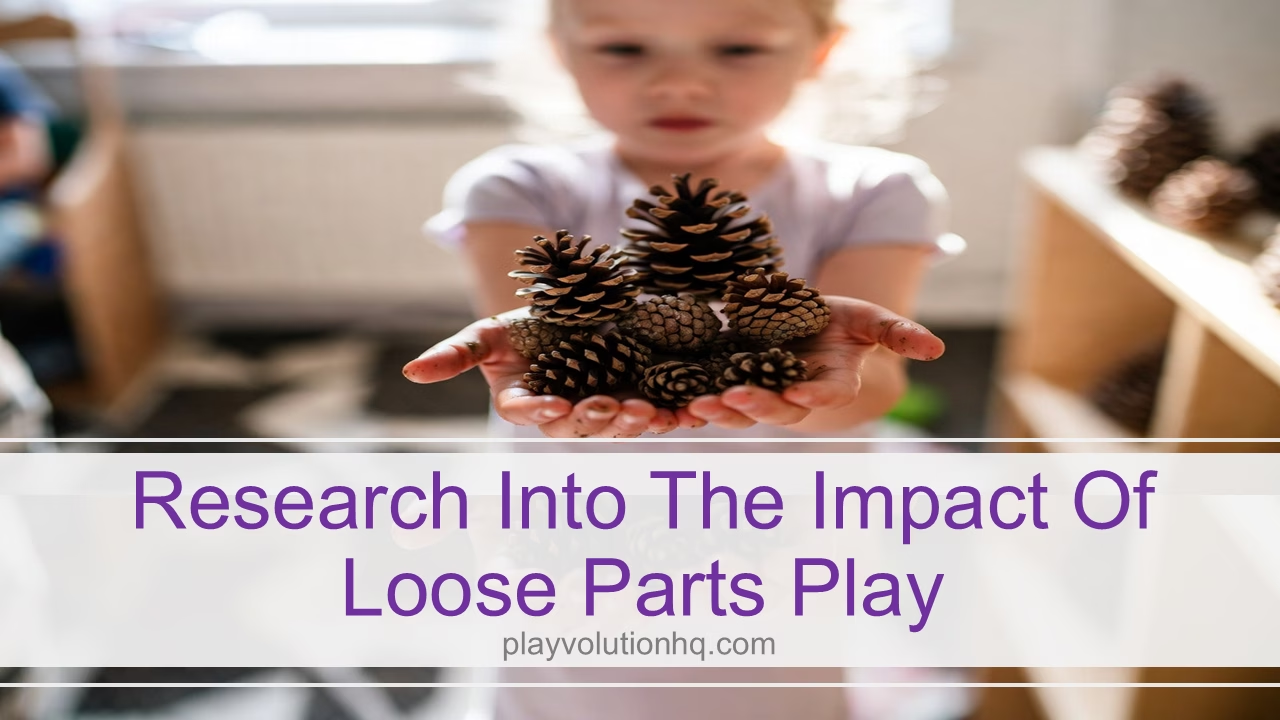
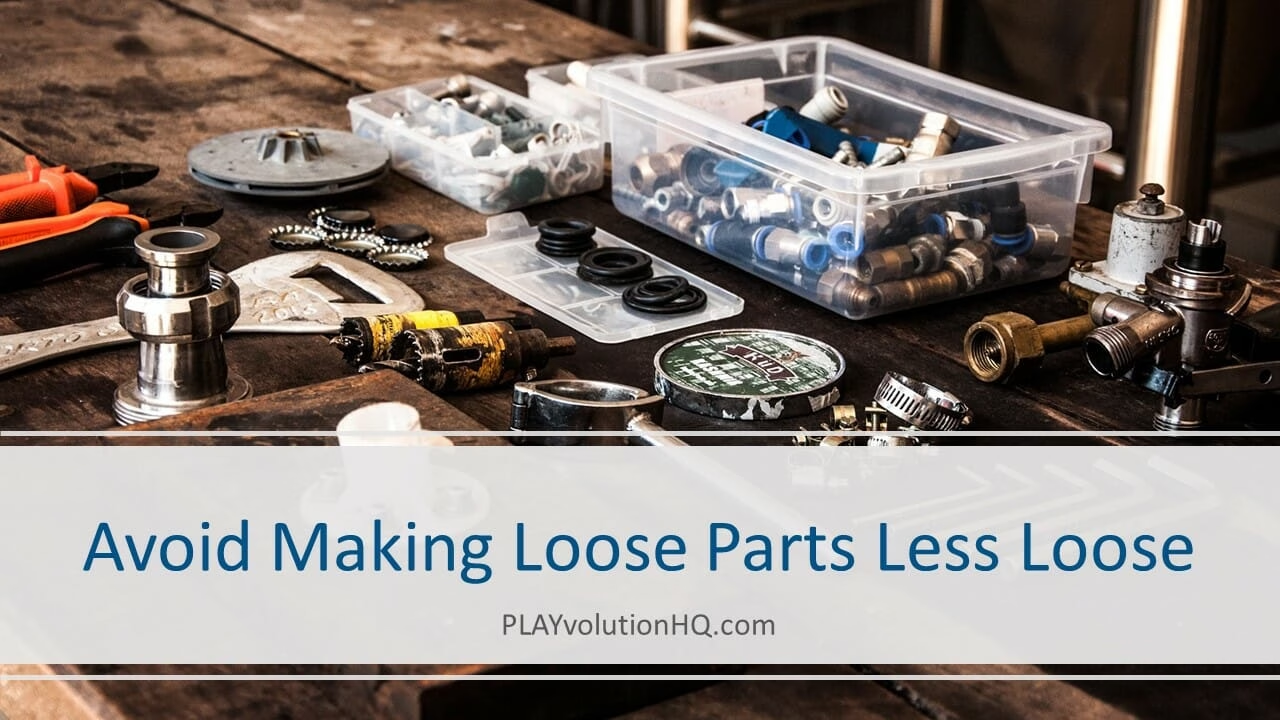
If you’re ready to shift that perspective, here are some resources that help move beyond loose parts play barriers:
Pushback and Team Resistance
Even if you’re personally okay with (or willing to wrestle with) the “it looks like garbage” factor, the mess, cleanup, storage headaches, and other logistics, that doesn’t mean parents, coworkers, administrators, or other stakeholders will be on board.
They often pile on “safety” as a reason to pull back or avoid loose parts altogether. Sometimes it’s a valid point that needs addressing; more often, in my experience, safety (along with all the other barriers we’ve covered) gets raised as a convenient roadblock to stop change in its tracks.
Sure, maybe Coteacher Becky is out to get you and hates all your ideas, but such resistance is rarely malicious or personal. It’s usually just human discomfort with change and its murky unknowns, disconcerting uncertainty, and feelings of frustration. It’s easier to avoid than embrace.

Caving in or dodging the conversation altogether is tempting. But if you’re up for it, the resources from the perception section can help win hearts and minds. Start small, share stories, and show the learning in action.
Personal Tolerance for Uncertainty
Even after navigating all the roadblocks above, you may still run into this one from time to time. Being truly open-ended with how children engage with loose parts can be physically and mentally exhausting.
In such an environment, the adult’s role is threefold:
- Facilitator—Ensuring the play environment is both physically and mentally inviting.
- Supporter—Working to keep the play trundling along.
- Hazard Mitigator—Striving to keep the environment safe.
You never know what’s going to happen next, so you can’t be 100% prepared. This gnaws on some people. Worksheets and lesson plans are orderly and predictable; truly loose parts are not.
More self-care helps. When you meet your own needs away from work, it’s easier to focus time, energy, and attention on the kids’ needs while at work.
Something else that helps: empowering the kids even more.
It’s amazing how good kids are at taking on Facilitator and Supporter tasks when we help them (and trust them) to develop those skills. There are plenty of early learning programs that allow kids to rearrange the play space to fit their play, fill up the green paint cup when it runs low, and organize a game of tag. With experience-based practice, kids also become quite skilled at hazard mitigation.
You obviously can’t turn these tasks over to them completely, but you can share the workload. Doing so is a win for everyone—the kids learn more, build confidence in their abilities, and your stress goes down.
Sharing the uncertainty doesn’t eliminate it—it distributes it. And suddenly, loose parts can stay a little looser.
Loose Parts Play Barriers Wrap-Up
Loose parts play barriers are real—storage crunches, mess dread, program squeezes, “garbage” looks, team pushback, and that inner gnaw when uncertainty takes over.
They’re logical. They’re human. And they lead us to impose limits we never fully intended.
The good news? Simply naming them those loose parts play barriers is the first crack in the wall. Once we see them clearly, we can start loosening our grip—one small shift at a time. A bigger shed, a slower transition, a conversation with Coteacher Becky, a deeper breath when the uncertainty creeps in, or handing a bit more of the load to the kids.
Loose parts don’t need perfection. They need permission to stay loose. And so do we.
Contribute content to Playvolution HQ
Brought to you by Explorations Early Learning
Browse Trainings
Post Author

Jeff Johnson is an early learning trainer, podcaster, and author who founded Explorations Early Learning, Playvolution HQ, and Play Haven.
Leave a Reply