
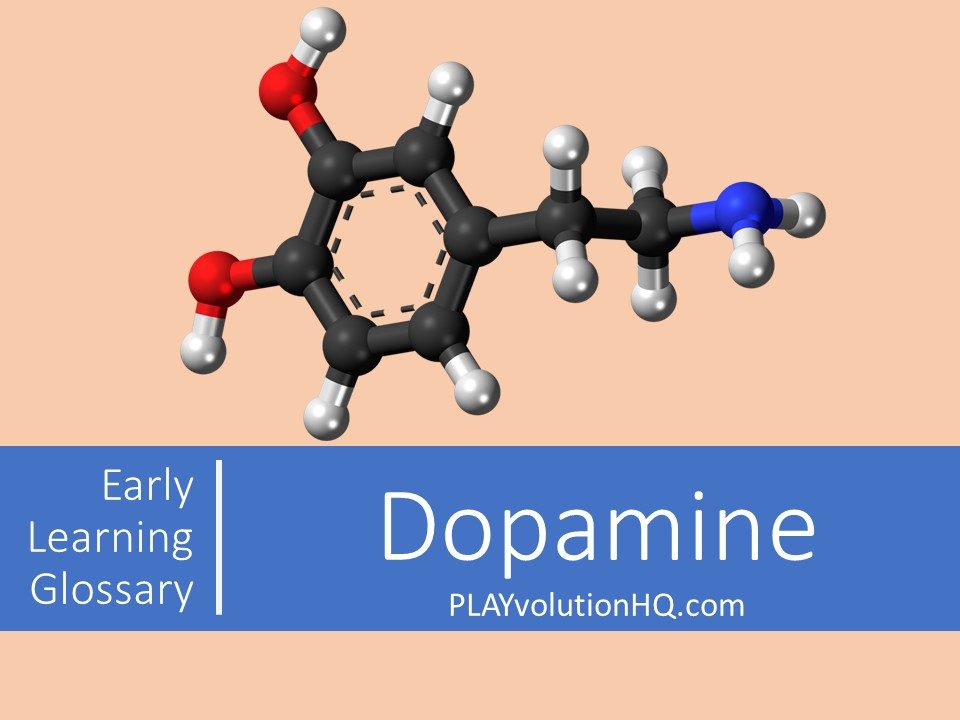
What Is Dopamine?
Dopamine is a neurotransmitter that plays many important rolls in both the brain and body.
Dopamine “is a neurotransmitter, one of those chemicals that is responsible for transmitting signals in between the nerve cells (neurons) of the brain. Very few neurons actually make dopamine.” Because it is such an essential part of the brain’s pleasure centers, it is involved in motivation and learning.
Dopamine plays a big part in our lives:
Habits are a dopamine-driven feedback loop. Every behavior that is highly habit-forming—taking drugs, eating junk food, playing video games, browsing social media—is associated with higher levels of dopamine. The same can be said for our most basic habitual behaviors like eating food, drinking water, having sex, and interacting socially. For years, scientists assumed dopamine was all about pleasure, but now we know it plays a central role in many neurological processes, including motivation, learning and memory, punishment and aversion, and voluntary movement.
James Clear (Clear, James. Atomic Habits (p. 106). Penguin Publishing Group. Kindle Edition.)
Contribute content to Playvolution HQ
Brought to you by Explorations Early Learning
Thoughts On This Entry?
I’d love to hear your thoughts on improving this entry and suggestions for additional glossary additions in the comments below. You can also contact me with comments or concerns.
Browse Trainings

Post Author

Jeff Johnson is an early learning trainer, podcaster, and author who founded Explorations Early Learning, Playvolution HQ, and Play Haven.
Leave a Reply