
Table of Contents
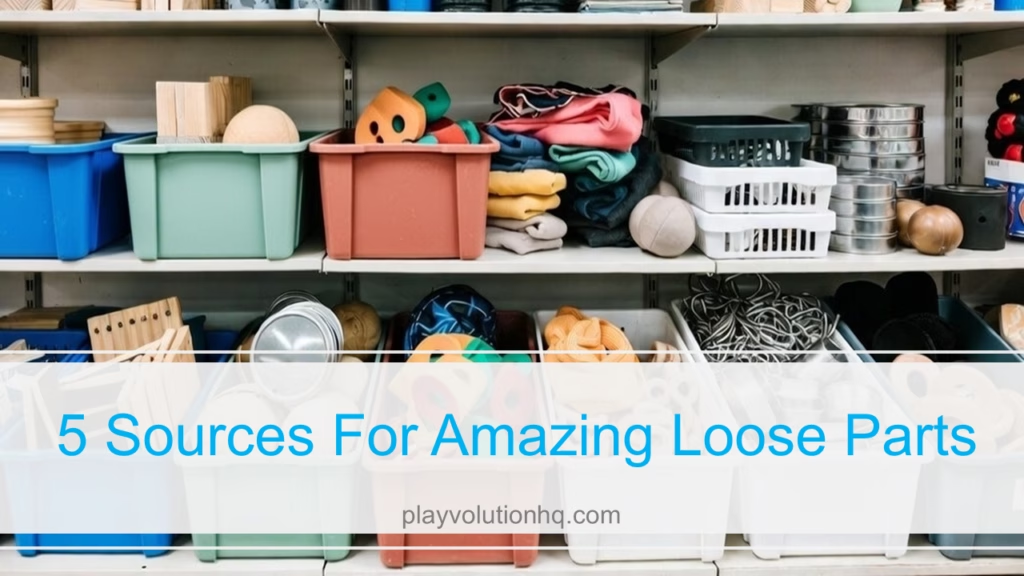
This post explores 5 sources for amazing loose parts that spark open-ended play and exploration in early learning programs and at home. If you’ve been wanting to build or expand your loose parts collection, these are practical, often free (or at least inexpensive) places to start.
Home
The first of our 5 sources for amazing loose parts is right in your home.
Your home is probably already loaded with interesting loose parts that kids would love exploring. For example, pots, pans, and wooden spoons from the kitchen are classic favorites—perfect for entertaining energetic, mobile infants and toddlers while you’re getting dinner on the table.
Take a look around (kitchen, garage, closets, laundry room, recycling bin), and you’ll find endless possibilities: old clothing or fabric scraps, kitchenware like muffin tins and colanders, empty plastic yogurt containers or glass jars, cardboard boxes and tubes headed for recycling, old suitcases or purses, keys on a ring, buttons, bottle caps, corks, ribbons from gift wrapping, puzzle pieces, or even spare hardware like nuts/bolts/washers.
I break loose parts from home into two handy categories:
- Good-Bye-And-Good-Luck items—Things you’re happy to part with permanently (e.g., empty jars, old T-shirts cut into strips, expired spices in containers, broken jewelry beads).
- I’ll-Need-That-Back items—Tools or household objects loaned out for short play sessions (e.g., a bathroom scale for weighing “treasures,” a set of measuring cups, a wheelbarrow for hauling blocks, or a colander for sound play—return them when play wraps up).
Here are some Loose Parts From Your Home Ideas.
Nature
The second of our 5 sources for amazing loose parts is Mother Nature herself.
Once you’ve raided your home, step outside and see what nature has to offer. Loose parts literally grow on trees— leaves, seed pods, acorns, pinecones, flowers—and scatter across yards, beaches, parks, and sidewalks. The truth is, you probably don’t even need to venture far into the “wilds.” Your backyard, neighborhood green space, or local beach can supply plenty. For example, the oak tree outside my back door rains acorns every year.
I break loose parts from nature into two meaningful categories:
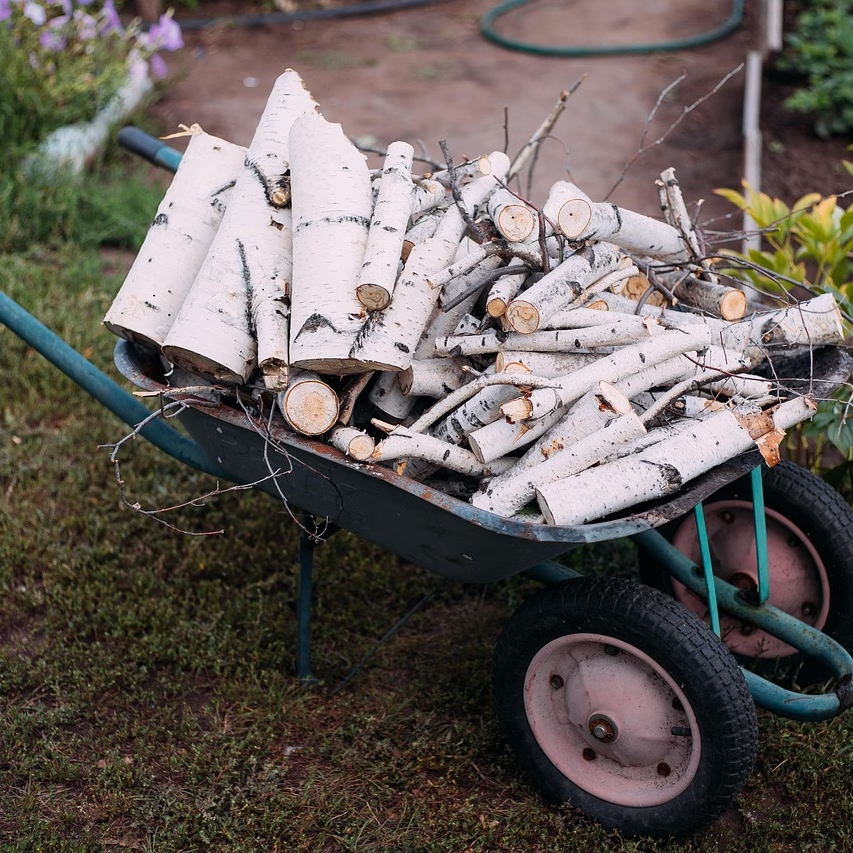
- Physical Objects—Tangible, collectible items you can bring indoors (with care) or play with outside: sticks and branches, stones and pebbles, sand, grass clippings, mud, shells, pinecones, seed pods, fallen leaves, feathers, flowers, caterpillars (observe and release), or even a surplus zucchini from the garden.
- Phenomena And Concepts—These are nature’s loose parts that you can’t really pick up and bring inside—they’re experiences kids have to go out and meet. Wind that moves scarves or sails paper boats, rain making puddles to stomp in and mud to shape, hot sun warming the ground for shadow play, or fog turning everything quiet and soft. They pull kids outside, get them moving, and let them notice how the world changes.
The best approach? Bring nature’s loose parts to the kids and bring the kids to nature’s loose parts. Outdoor time is a win-win—children get fresh air, movement, and direct sensory experiences while discovering how the world works.
A few respectful tips when collecting:
- Check Local Rules—many parks, nature preserves, and beaches prohibit removing natural items (e.g., no taking shells from protected areas or plants from state parks).
- Don’t Be Greedy—take only what you need, leave the rest for wildlife and future visitors.
Here are some Loose Parts From Nature Ideas.
Connections
Once you’ve plundered your home and yard’s loose parts offerings, it’s time to expand the search. The third of our sources for amazing loose parts is your connections in the community. This includes neighbors, friends, family, families of children in your program (and possibly their neighbors, friends, and families), and local businesses or organizations.
Here are some examples of sources for amazing loose parts from back in my child care director days:
- An old dude pulls up in his F-150 full of black trash bags. Turns out the 20+ bags were stuffed with baseball-sized pine cones—thousands of them. He lived nearby, drove by the playground almost daily, saw the kids busy playing, and figured they’d have fun with them. He was right.
- The mom of one of our preschoolers worked at a printing company. She’d bring in cases of paper and cardstock nearly weekly—different colors, shapes, and textures. For years, we had almost too much paper.
- When we were landscaping a new playground, an acquaintance who managed a local nursery went above and beyond to convince the owner to donate perennials, shrubs, and trees. (Remember, loose parts can be stationary and living things.)
- Once families learned about the benefits of loose parts play, they started dropping off This and That (and maybe Some Of Those) from time to time. I’d hear things like, “Jeff, my office is getting rid of an overhead projector—it works, just hasn’t been used in 5 years. Would the kids like it?” or “We’ve been bottle-feeding some piglets—want me to bring them by for an afternoon to meet the kids?” The answer was always yes.
The key? Ask. Post a simple wishlist in your parent group, newsletter, or neighborhood app: “We’re collecting safe, clean discards for open-ended play—wood scraps, fabric, interesting junk, etc. Drop-offs welcome!” People love giving away stuff they’d otherwise toss, especially when they know it’s for kids’ play.
Here are some Loose Parts From Community Connections Ideas.
Thrift
The fourth of our sources for amazing loose parts is thrift stores and similar spots for gently used secondhand items. This is the first category where money usually changes hands, but it’s rarely much—often just a few dollars or less.
In my experience, many of these places are open to negotiation. I’d explain the items were “for the kids,” tilt my head a little, bat my eyelashes, and walk out with a deal. It worked more often than you’d think.
Here’s a solid list of sources that fit here:
- Thrift stores and charity shops
- Garage sales, yard sales, and estate sales
- Flea markets, swap meets, and boot sales
- Habitat for Humanity ReStores
- Recycling centers, municipal recycling depots, and drop-off sites
- Creative reuse centers, art scrap stores, and material exchanges
- Salvage yards, architectural salvage stores, and building material recyclers
- Scrap stores and industrial scrap suppliers
- Buy Nothing groups or neighborhood free piles
Some people live for the hunt in these venues. Go in with a wishlist and an open mind—you never know when you’ll spot the perfect thingamabobber that sparks hours of play and exploration.
Here are some Loose Parts From Thrift Ideas.
Retail
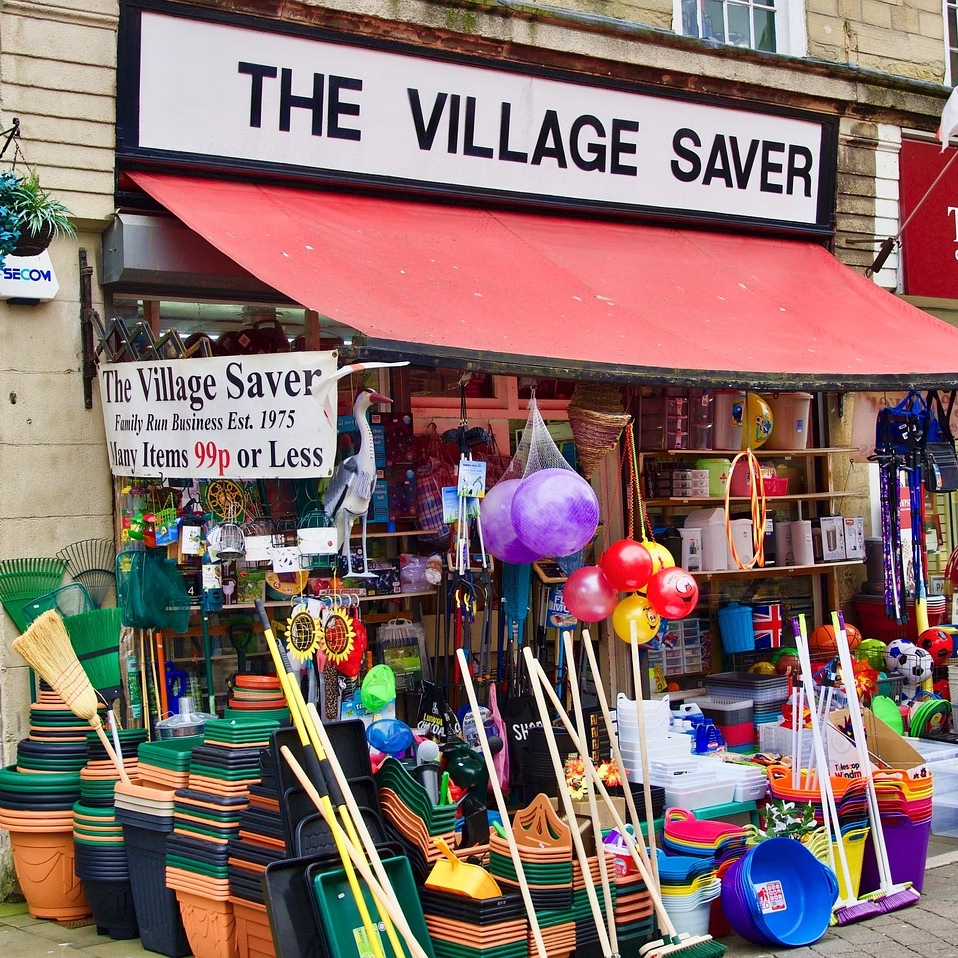
The final source for amazing loose parts is retail outlets—both physical stores and online. This is by far the most expensive option, but with some planning, you can keep costs low.
Watch for sales, clearances, and markdowns. I’ll never forget when my wife came home and said Walmart had shower curtain rings on clearance. I asked how many she bought. “None,” she said. “Next week they’ll be half off the clearance price.” That’s how we ended up with a tote full of hundreds of them.
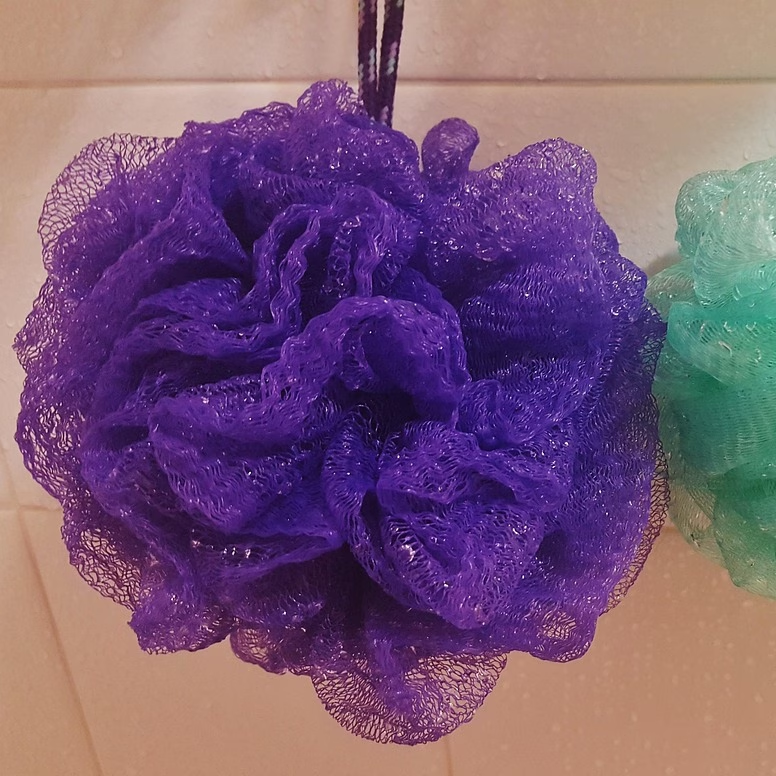
Dollar stores are another cost-effective go-to. A $100 loose parts budget goes a long way in one of those stores. They clear out items regularly, too. I once spent $5 and walked out with two shopping carts full of those mesh shower puff loofah things.
Use retail as a last resort or for specific items that are hard to find via the above sources.
Here’s a link to some Loose Parts From Retail Ideas.
Loose Parts Sourcing Cheat Sheet
Here’s a handout I put together highlighting these sources for amazing loose parts:
5 Sources For Amazing Loose Parts Wrap-Up
There you have it—5 sources for amazing loose parts without breaking the bank: Home, Nature, Connections, Thrift, and Retail (last resort only).
Start close to home, tap your network, hunt secondhand treasures, and buy new only when needed. Inspect for safety (no sharp edges, choking hazards, or mold) and wash everything thoroughly. You knew that, but I had to say it.
Happy hunting—your next haul is probably closer than you think.
Contribute content to Playvolution HQ
Brought to you by Explorations Early Learning
Browse Trainings
Post Author

Jeff Johnson is an early learning trainer, podcaster, and author who founded Explorations Early Learning, Playvolution HQ, and Play Haven.
Leave a Reply