
Synopsis
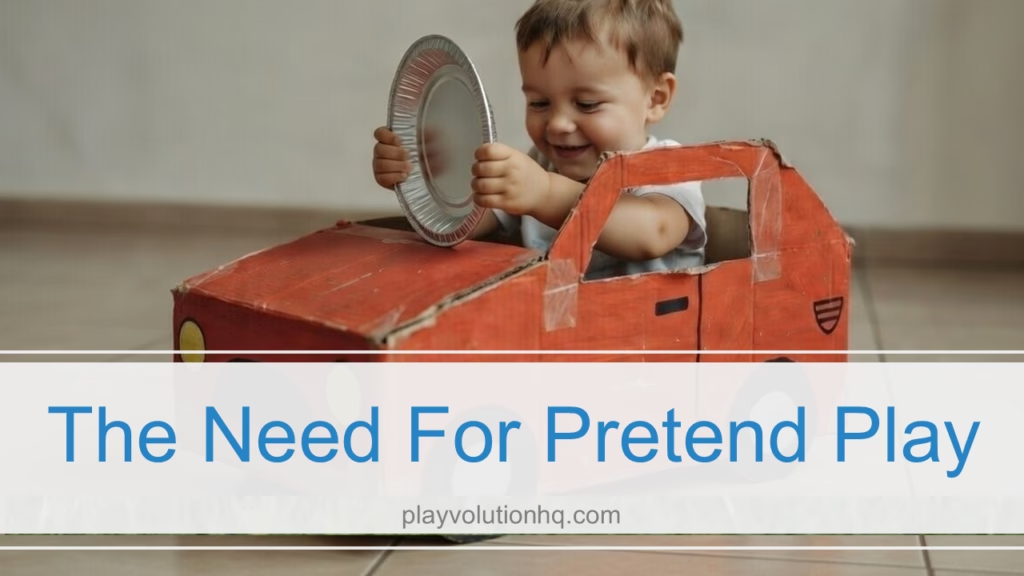
This 2012 piece makes a clear case for why pretend play matters so much in child development. It highlights how make-believe supports flexible thinking, empathy, impulse control, emotional processing, richer language use, and creative problem-solving—all through child-led, uninterrupted imaginative play. The research shared here reinforces that giving kids open time and space (with minimal adult direction) lets them practice real-world skills in a natural, engaging way that structured activities often can’t match. A solid reminder to prioritize and protect that kind of play.
Article
Here’s the whole article:
Contribute content to Playvolution HQ
Brought to you by Explorations Early Learning
Browse Trainings

Post Author

Jeff Johnson is an early learning trainer, podcaster, and author who founded Explorations Early Learning, Playvolution HQ, and Play Haven.
Leave a Reply