Table of Contents
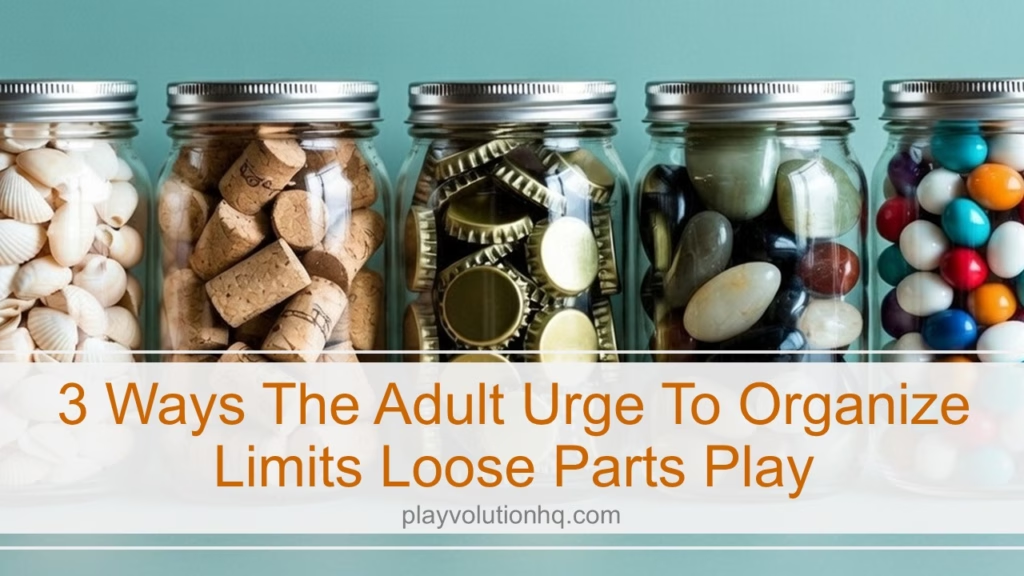
The urge to organize is hard for many adults to fight. Heck, it’s even hard to visualize. For example, some readers would become physically uncomfortable imagining a cork buried halfway down the jar of shells in the image above. Someone read the above sentence and had a cold electric tingle zip up and down their spine.
The discomfort is understandable—the human brain likes order. The problem is that this adult urge to organize tends to make loose parts play more rigid. This reduces the learning opportunities such play offers. Let’s look at three ways this happens:
It Limits Children’s Opportunities to Create Their Own Systems
When loose parts are always pre-sorted into adult-selected categories, children have fewer chances to practice their own sorting, grouping, and classification skills. Children’s minds, just like adults’, are drawn to organizing the world around them. One of the most common ways young children naturally engage with loose parts is by sorting them—whether by texture, color, size, type, or some entirely personal logic that only makes sense to them.
For example, when my son was young, he would regularly dump dozens (hundreds?) of toy cars and trucks into a huge pile, then spend hours re-sorting them in endlessly creative ways: favorites in one pile, ones he was tired of in another; fast ones here, slow ones there; metal in one group, plastic in another, wood in a third. He sorted by color, by wheel size, by who gave them to him—the variations went on and on.
It’s far easier (and more authentic) to offer a generous pile of unsorted materials so children can sort if the inclination strikes, than to try to structure a formal sorting “lesson” for those who aren’t interested in the moment.

It Reduces the Likelihood of Serendipitous Connections
Separate bins make it harder for unexpected pairings to occur naturally—like that time peanut butter cups were ‘invented’ when someone’s chocolate accidentally ended up in someone else’s peanut butter. This is especially true in settings where only one type of loose parts is out at a time (“It’s Beach Week—bring out the shells!”) or when children are explicitly told not to mix items from Basket A with Tote B. These common practices in early learning environments quietly limit the random collisions that so often spark discovery and new ideas.
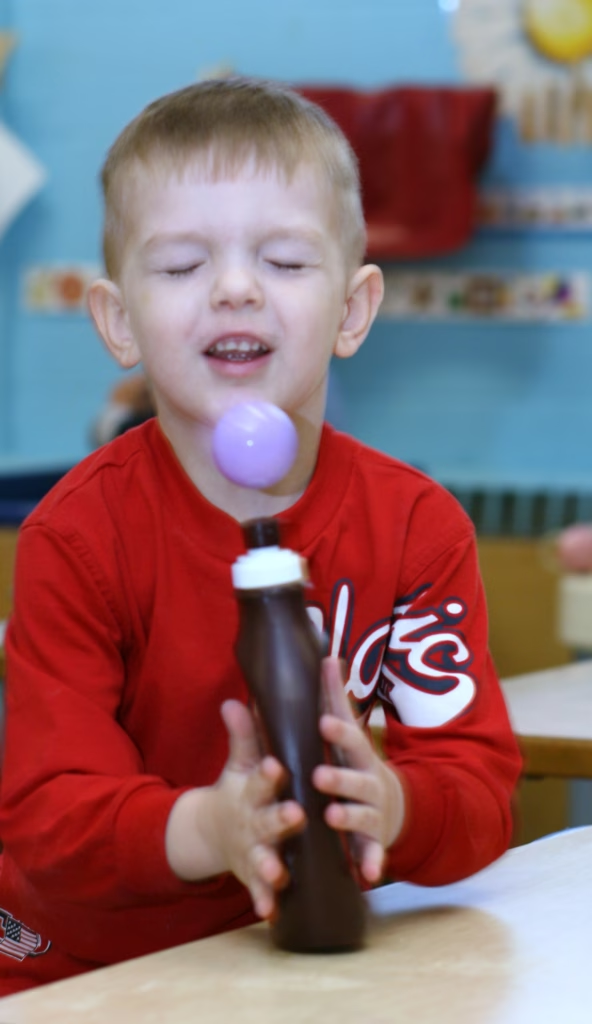
Here’s a clear example of how mixing loose parts can ignite inventiveness: In our family child care space, 3-year-old Noah was exploring the usual glorious clutter of mixed materials. Out of nowhere, he placed half a plastic Easter egg on top of a plastic chocolate sauce bottle and gave it a big squeeze. The egg half shot upward, nearly hitting the ceiling, and his eyes widened with pure, delighted surprise at what he’d just discovered. (See a longer version of this story here.)
That single, unplanned moment turned ordinary recyclables into a launchpad for wonder—something far less likely in neatly separated bins.
It Narrows the Open-Ended Nature of the Materials
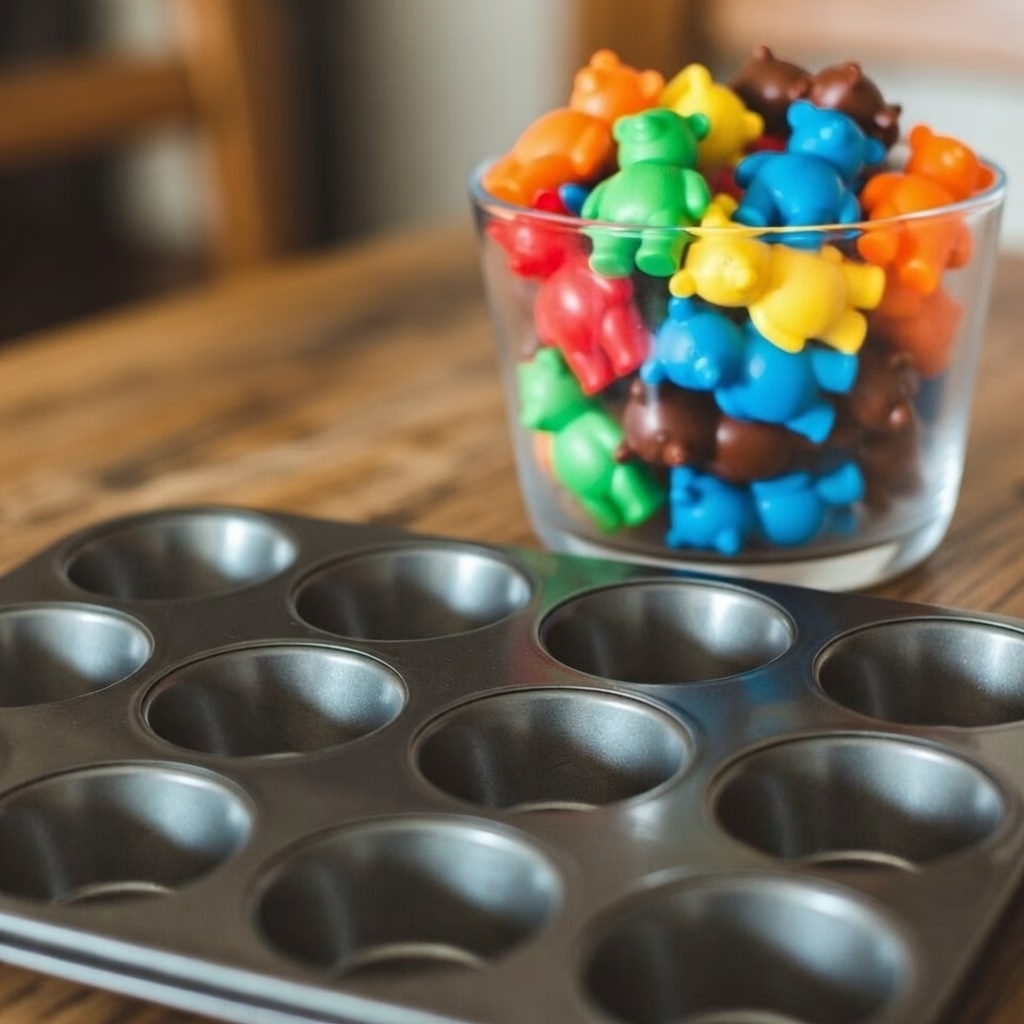
The adult urge to organize loose parts can subtly—and sometimes not so subtly—suggest intended uses for the materials, guiding play toward adult-planned or “approved” activities. Adults often feel drawn to structure lessons and experiences; for example, placing a muffin tin on an activity table next to a bowl of counting bears isn’t truly an invitation to loose parts play—it’s an invitation to perform a specific sorting task.
When items are used to nudge children toward predetermined curriculum goals or lesson plans while still calling it “loose parts play,” it shifts away from the essence of the approach. True loose parts play depends on children being free to create their own narratives and meanings. Any steering of their choices reduces their sense of agency and control over the experience.
When materials stay mixed, with no pressure on how to use them, they offer a richer sense of possibility and are far more likely to spark divergent exploration and creative thinking.
The Urge To Organize Wrap-Up
The adult urge to organize is natural and understandable—we all feel it. But when loose parts are pre-sorted into tidy categories, we quietly reduce the very qualities that make them powerful: the chance for children to build their own systems, the possibility of unexpected and surprising combinations, and the open-ended freedom that lets materials become almost anything.
None of this means we have to abandon all structure or live in chaos. It simply means noticing the trade-offs. Next time you find yourself sorting loose parts into separate bins, pause for a moment. Ask: What might open up if these materials stayed a little more mixed?
Contribute content to Playvolution HQ
Brought to you by Explorations Early Learning
Browse Trainings

Post Author

Jeff Johnson is an early learning trainer, podcaster, and author who founded Explorations Early Learning, Playvolution HQ, and Play Haven.
Leave a Reply