
Synopsis
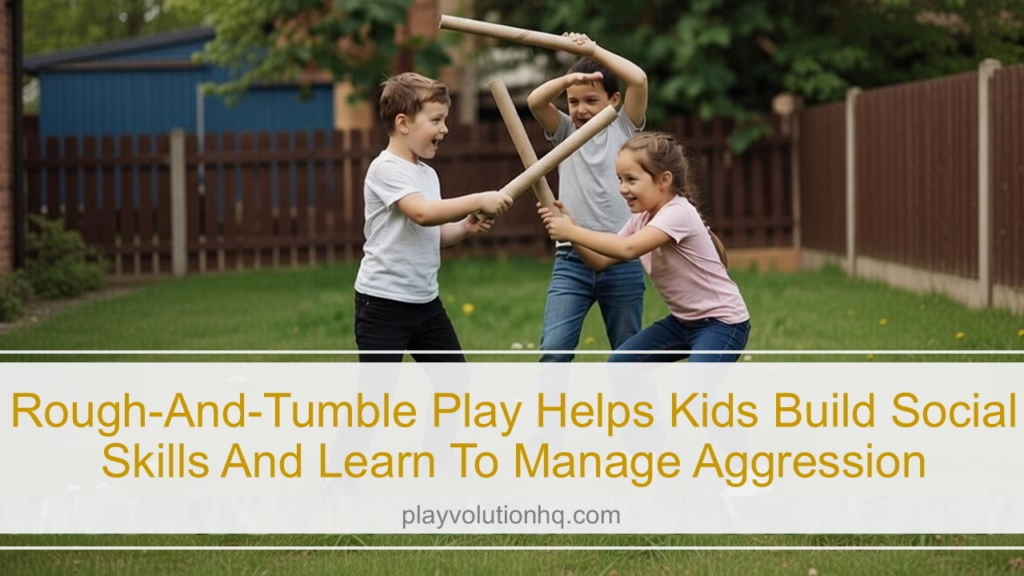
In this 2006 paper, researcher Pam Jarvis explores “rough and tumble” play—think play fighting, chasing, wrestling, and other vigorous, physical fun that kids (especially boys) love. She looks at it through an evolutionary lens, arguing that this kind of play isn’t just random roughhousing; it’s a built-in way for children to practice important life skills in a safe, pretend context.
Key takeaways:
- Rough-and-tumble play helps kids learn to manage aggression, read social cues (like when a playmate is still having fun versus getting upset), and build emotional regulation—skills needed for getting along as adults.
- It often involves storytelling or “narratives” that children create during play (e.g., pretending to be superheroes or animals in battles), which supports imagination, social understanding, and even early moral lessons about fairness and boundaries.
- Boys tend to engage in it more frequently and intensely than girls, but both benefit; Jarvis highlights how adults (like teachers or parents) sometimes misunderstand or discourage it, missing its real developmental value.
- From an evolutionary view, this play mirrors patterns seen in young primates, where it prepares individuals for adult social competition and cooperation without real danger.
Overall, the paper makes a clear case for letting kids engage in safe rough-and-tumble play as a natural, valuable part of growing up—rather than seeing it as something to stop. It’s a thoughtful reminder that what looks like “just messing around” can teach deep lessons about life.
The Study
Here’s the whole study:
Citation
Jarvis, P. (2006). “Rough and Tumble” Play: Lessons in Life. Evolutionary Psychology, 4(1). https://doi.org/10.1177/147470490600400128 (Original work published 2006)
Contribute content to Playvolution HQ
Brought to you by Explorations Early Learning
Browse Trainings

Post Author

Jeff Johnson is an early learning trainer, podcaster, and author who founded Explorations Early Learning, Playvolution HQ, and Play Haven.
Leave a Reply