
Synopsis
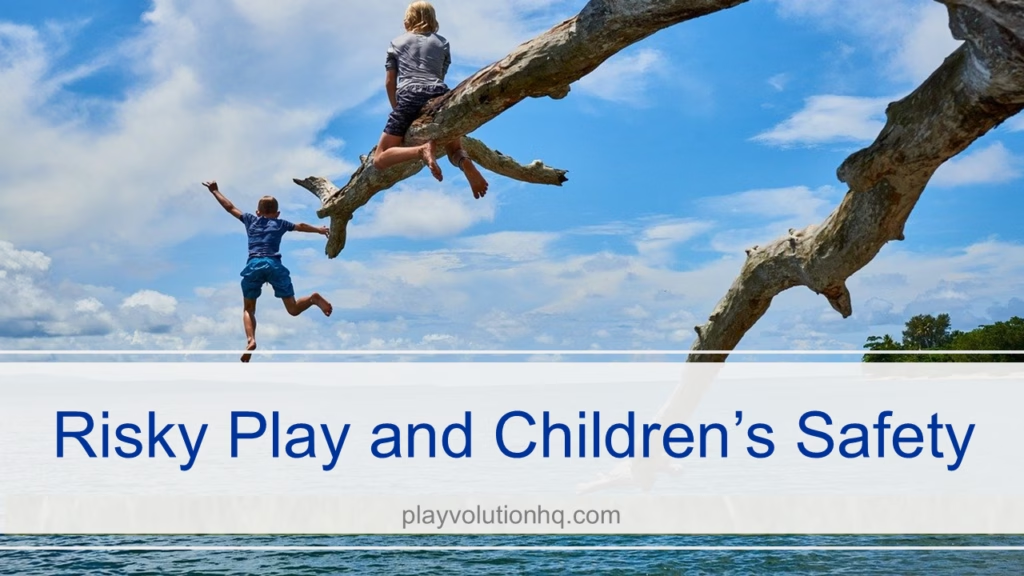
This 2012 review makes a compelling case for letting children engage in outdoor “risky play” while still keeping them safe. It argues that over-protection can actually harm healthy development.
- Children have a natural, universal drive for thrilling play (heights, speed, rough-and-tumble, etc.) that helps them master motor skills, assess risks, build resilience, regulate emotions, and gain confidence.
- Generational shifts toward more indoor, supervised time have coincided with rising obesity, sedentary behavior, anxiety, and reduced independence—trends the authors link in part to removing everyday play challenges.
- True safety means eliminating hidden hazards (like broken equipment) but allowing manageable risks so kids learn to handle them themselves—“as safe as necessary, not as safe as possible.”
- Promising solutions include adventure playgrounds with loose parts and child-led exploration, which research shows support creativity, social skills, and physical activity with surprisingly low injury rates.
The paper closes by calling for cross-disciplinary collaboration so injury prevention and child development goals work together instead of against each other.
Article
Here’s the article:
Citation
Brussoni M, Olsen LL, Pike I, Sleet DA. Risky play and children’s safety: balancing priorities for optimal child development. Int J Environ Res Public Health. 2012 Aug 30;9(9):3134-48. doi: 10.3390/ijerph9093134. PMID: 23202675; PMCID: PMC3499858.
Contribute content to Playvolution HQ
Brought to you by Explorations Early Learning
Browse Trainings

Post Author

Jeff Johnson is an early learning trainer, podcaster, and author who founded Explorations Early Learning, Playvolution HQ, and Play Haven.
Leave a Reply