

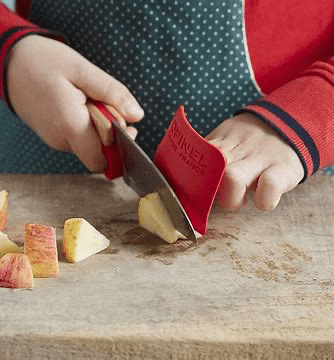
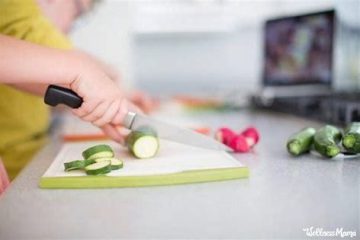
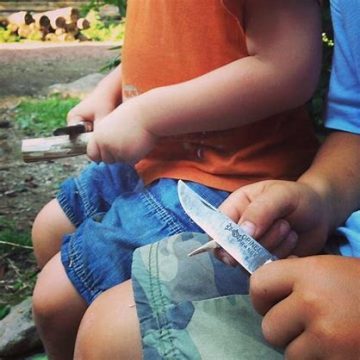
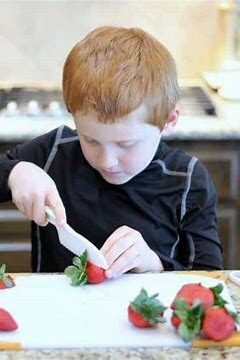
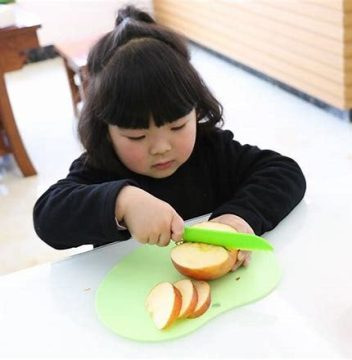
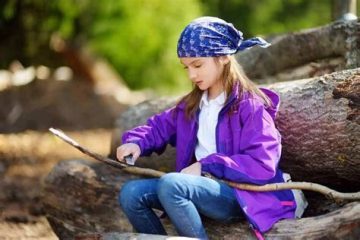
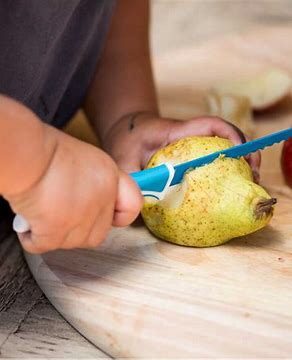
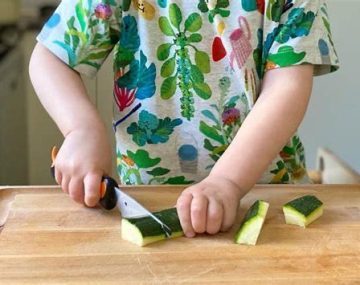
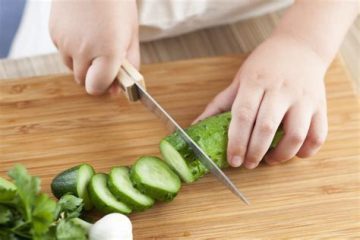
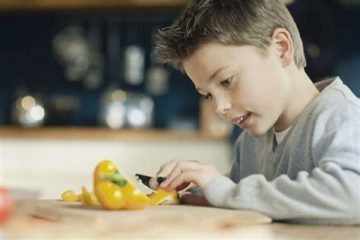
Knives make engaging and interesting loose parts as long as you’re thoughtful about how they are introduced and supervise them accordingly. For example, leaving half a dozen knives lying around a preschool classroom to be used willy-nilly is probably not a good idea, while well-supervised use in small groups on special occasions is.
Remember, the loose in ‘loose parts’ has nothing to do with mobility. Many loose parts are stationary (hills, doorways), and some, like knives, should not be considered free-range materials. These items should have limitations placed on how and where they’re used.
Trusting children to use knives may push the limits of your comfort zone, but there are all kinds of benefits for the children. For example, using a knife to slice lemons shows a child she’s trusted and capable, building her self-confidence. It also hones small muscle strength and control, hand-eye coordination, visual tracking skills, and more. Such activities also teach a valuable life skill—at some point, children will need to learn to handle sharp implements and cut things independently.
Let’s not forget this benefit: using a knife helps children practice concentrating. You may notice the appearance of concentration tongue when children are slicing things, indicating that their brains are very busy and focused.
If you’re considering allowing children to use knives for the first time, you may be interested in these posts on dangers, hazards, and risks.
Knives At Play


Contribute content to Playvolution HQ
Brought to you by Explorations Early Learning
Browse Trainings
Post Author

Jeff Johnson is an early learning trainer, podcaster, and author who founded Explorations Early Learning, Playvolution HQ, and Play Haven.
Leave a Reply