

I’ve made fly swatters available as loose parts for decades, and in all that time I don’t recall a single fly being swatted. There were attempts, but mid-swat the little critter would casually buzz away with a, “Too slooooooow! Is that all you got, Elroy! Better luck next time.” Then Elroy would swat at something else– pine cones, shadows, block towers, unsuspecting little Mitzi as she wrapped her baby doll in a blanket for a trip to the store Digby and Bailey set up in the dramatic play space.
Fly Swatters At Play
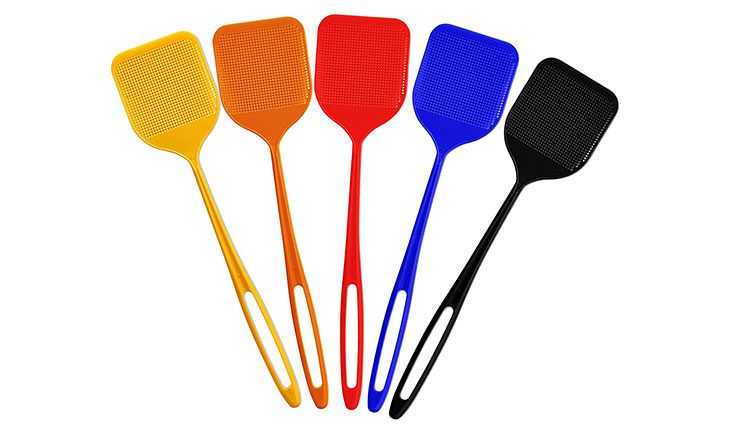
Anyway, fly swatters are engaging loose parts that’ll spark all kinds of activity. A short list of some things I’ve observed over the years.
- Swatters used as lightsabers, swords, and Ninja Turtle weapons
- Swatters used in playful and consensual swatter battles where the goal was to wack your opponent (Kid-created rules usually outlawed face swatting)
- Swatters taped to forearms in an effort to create flippers during some mutant human dramatic play scenario
- Swatters swatted into paint, shaving cream, water, and other sensory play concoctions
- Kid-invented games that involved balancing things on the end of swatters or trying to pick things up with swatters
- Swatters used as defibrillator paddles during a game of Hospital Emergency Room
- Attempts to swat the swatter’s texture onto the surface of play dough
I could go on. The point is that fly swatters are a great variable to add to early learning play spaces. They’re fun and they support the development of physical coordination, sensory integration, social skills, and more. Fly swatters for everyone!
Contribute content to Playvolution HQ
Brought to you by Explorations Early Learning
Browse Trainings


Post Author

Jeff Johnson is an early learning trainer, podcaster, and author who founded Explorations Early Learning, Playvolution HQ, and Play Haven.
Leave a Reply