
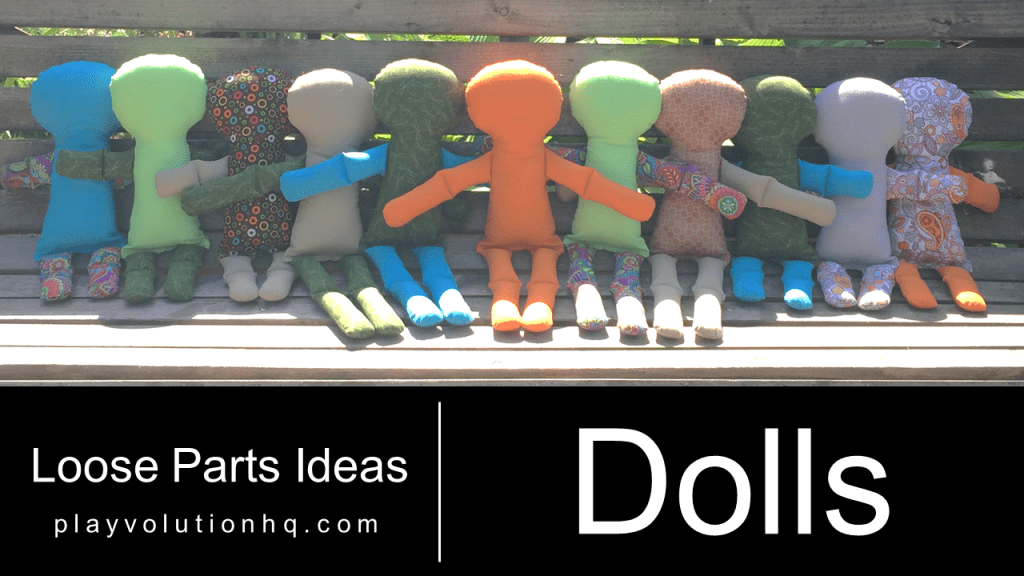
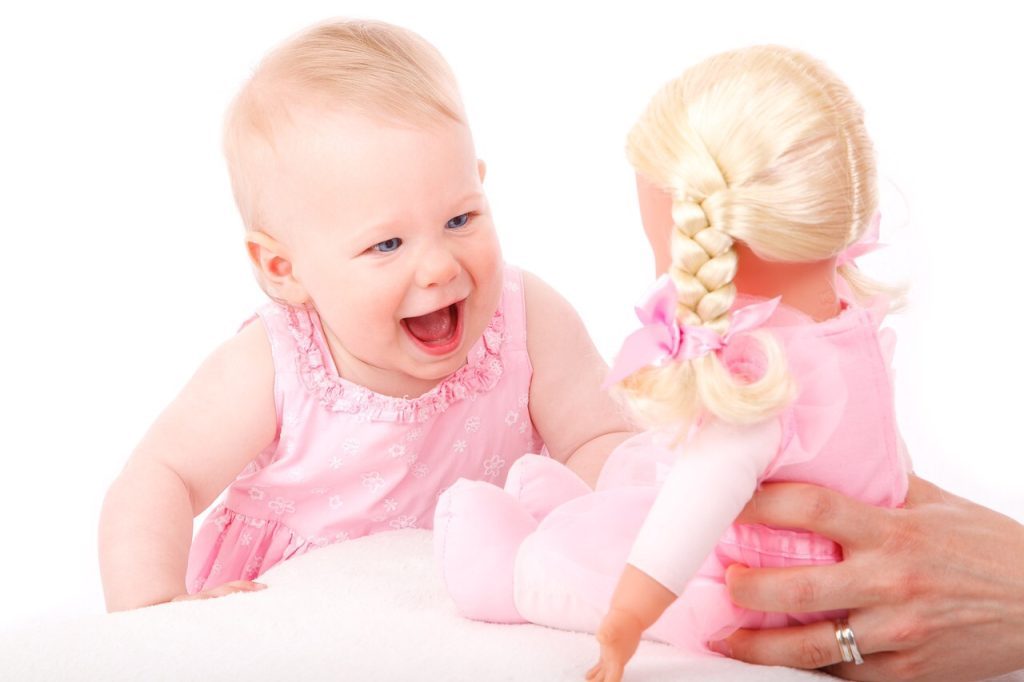
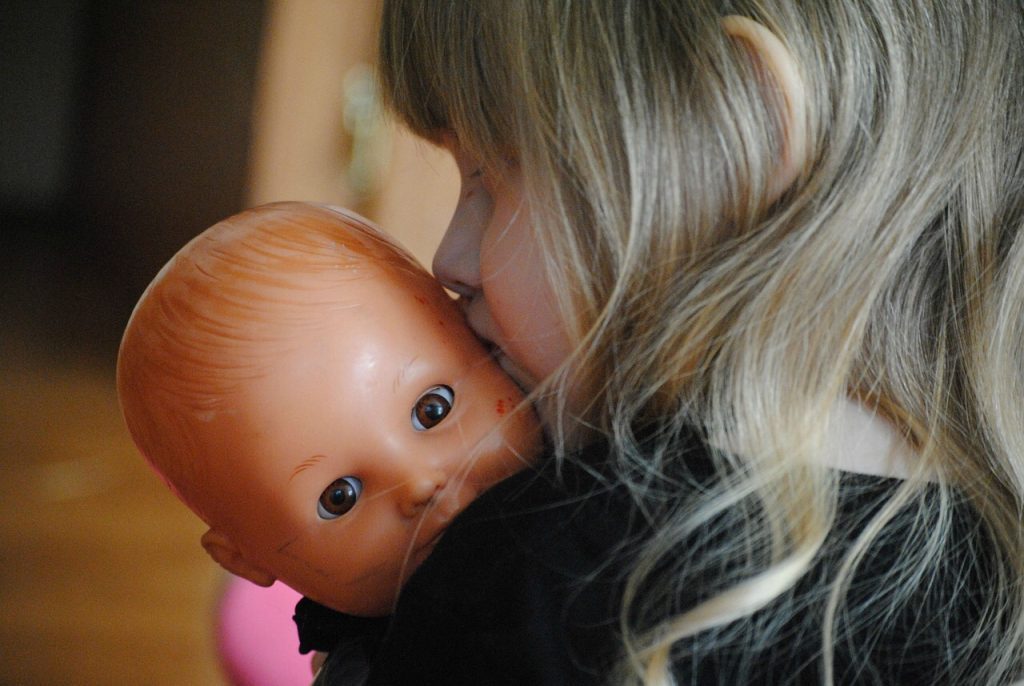
Dolls can play a pivotal role in nurturing children’s emotional, social, and imaginative development, serving as catalysts for role-playing scenarios. Dolls allow kids to take on the role of caregiver, sometimes mirroring the interactions they’ve had with their own caretakers.
But are they loose parts? Sure they are; Simon Nicholson defined loose parts as variables in an environment where people could interact.
When dolls are confined to the dramatic play area, they become less loose. Some adults prefer this because it seems more orderly, and cleanup time is easier.
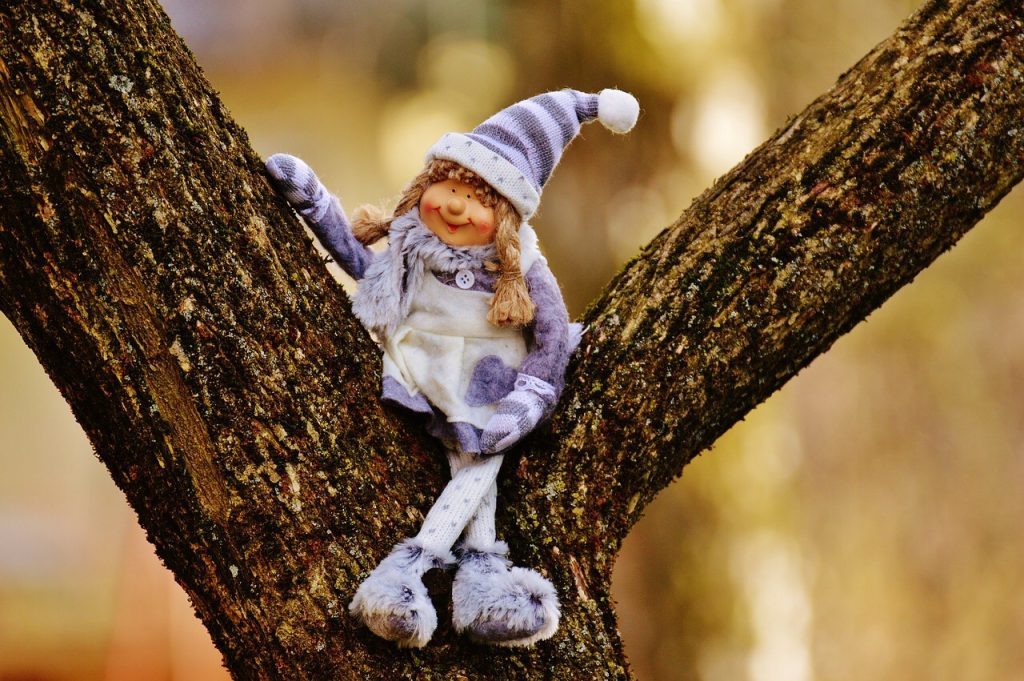
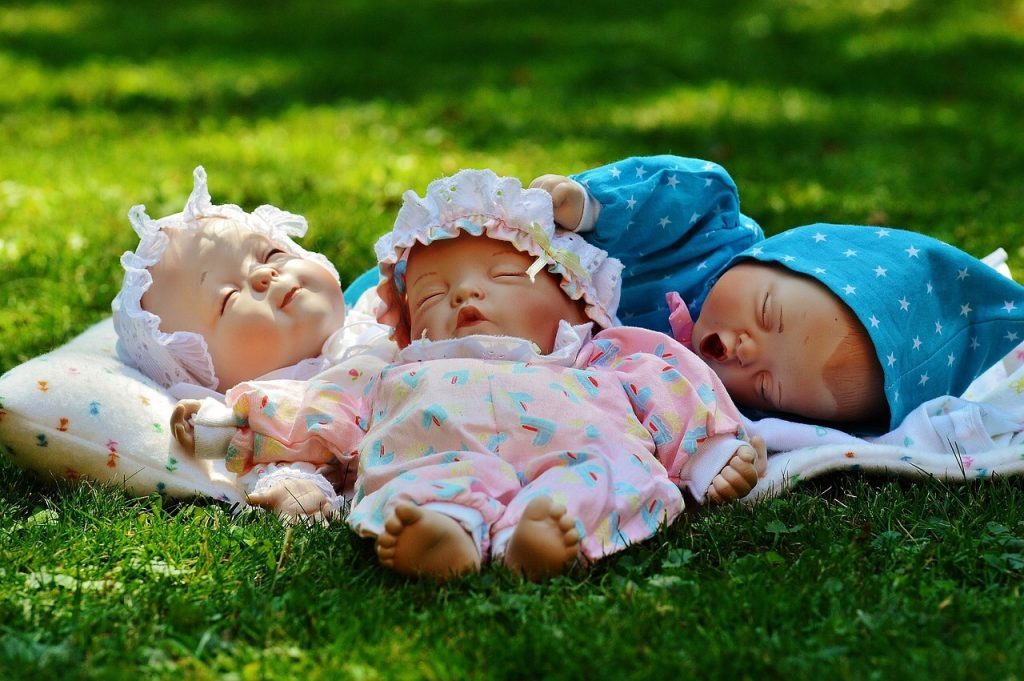
Here at Playvolution HQ, I recommend letting them roam throughout the play environment. Take them outside. Let them participate in art activities, water play, neighborhood walks, story time, and other activities.
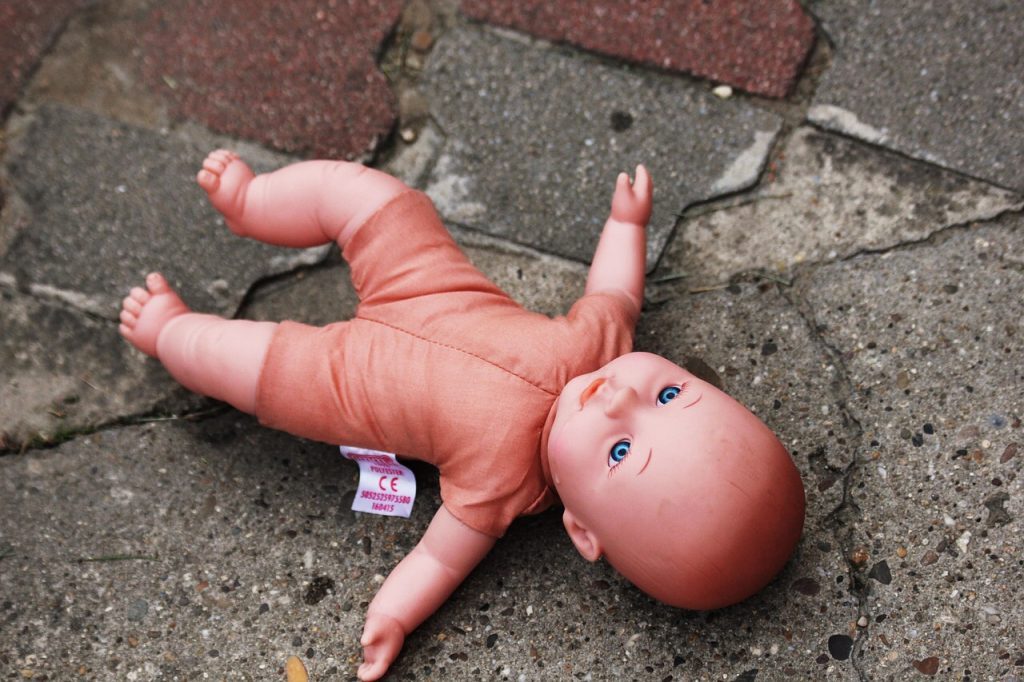
A final thought: Consider faceless babies like the ones in the above photo. This makes them an even looser part since it is easier for kids to imagine different facial expressions and appearances than the ones molded into most store-bought babies.
FYI, my wife designed and made the fabric dolls in the above photo. I plan to add a DIY article with a pattern for making them to the site at some point. Until then, let me know if you’re interested in a pattern, and I’ll get Tasha to dig it out so I can share it.
Dolls At Play

Contribute content to Playvolution HQ
Brought to you by Explorations Early Learning
Browse Trainings

Post Author

Jeff Johnson is an early learning trainer, podcaster, and author who founded Explorations Early Learning, Playvolution HQ, and Play Haven.
Leave a Reply