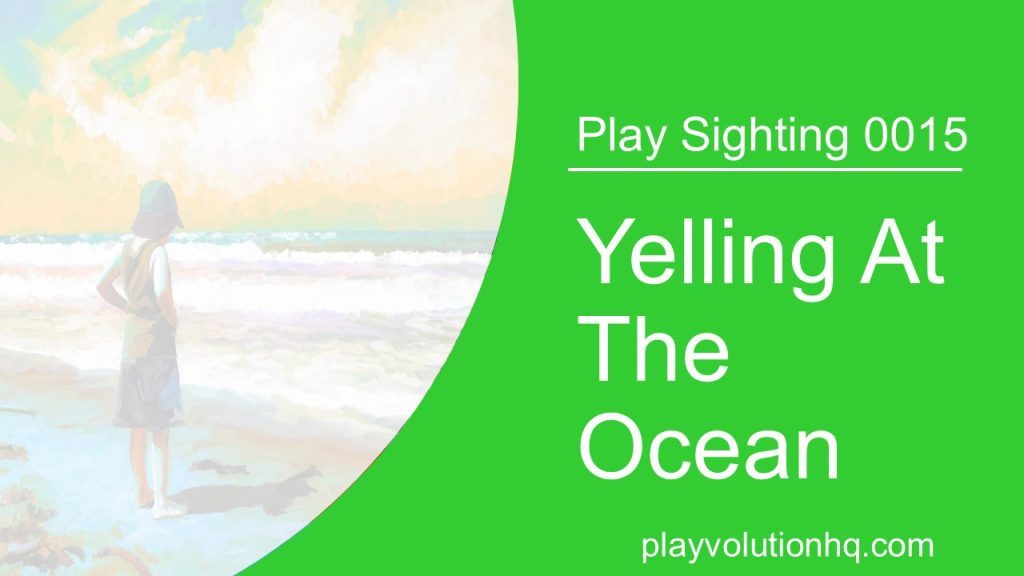
On the shore of Broome Beach in Western Australia, a five-year-old girl is deep in a bit of yelling at the ocean play. Her only playmate is the Indian Ocean.
She draws lines in the warm sand with a hunk of bleached driftwood, exclaiming, “THIS TIME, I MEAN IT! Leave my squiggles alone! I’ve had enough of this behavior.”
The Indian Ocean ignores her demands and erases the squiggles. Hands-on hips, she stomps a foot angrily at the disobedient ocean and draws more squiggles. She offers the sea “One more chance” to listen.
It doesn’t.
“I’ve had enough,” she yells, tossing the stick into the churning water, “go to your room. If you can’t listen, I can’t be around you.”
The ocean laps at her toes.
“It’s OK. Mama loves you. I had a hard day.”
Yelling At The Ocean Wrap Up
Her yelling at the ocean play seemed therapeutic, offering a needed emotional release. Play takes place away from the real world and allows players to explore past experiences and big emotions. It was safe for her to take on the mother role and engage in some power play with the Indian Ocean. It has no feelings to hurt and can’t send her to her room. Like a good playmate, it stayed in character and kept the play rolling.
Contribute content to Playvolution HQ
Brought to you by Explorations Early Learning
Browse Trainings


Post Author

Jeff Johnson is an early learning trainer, podcaster, and author who founded Explorations Early Learning, Playvolution HQ, and Play Haven.
Leave a Reply