Synopsis
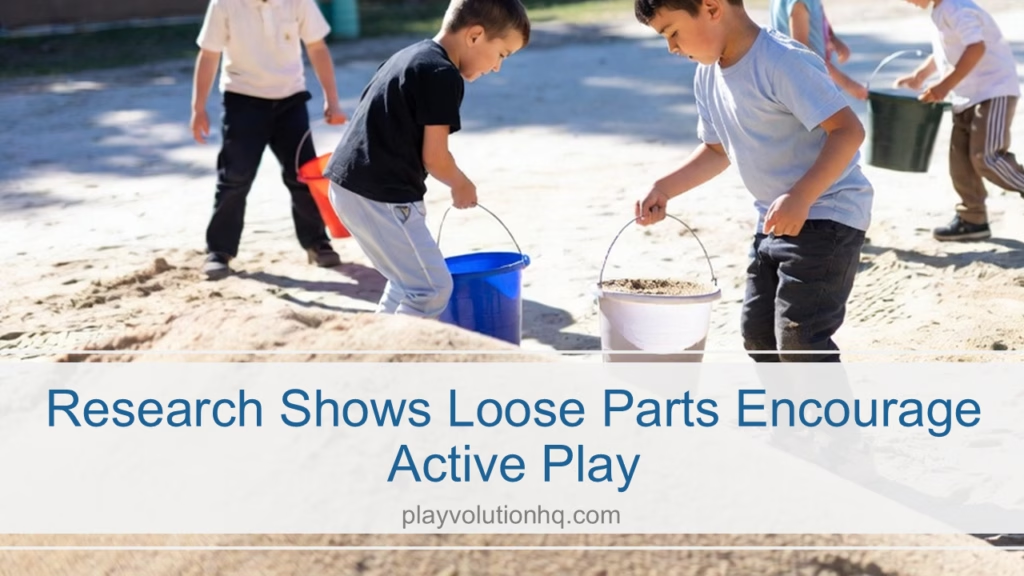
Study overview: Researchers tested the PLEY project in 19 Nova Scotia childcare centres (11 intervention, 8 control), involving 209 preschoolers aged 3–5 years (mean 4.2 years, ~45% girls). The 6-month intervention supplied outdoor loose parts kits (e.g., buckets, ropes, planks, balls, tires, fabric) for regular outdoor playtime, plus a 6.5-hour educator training on unstructured play and physical literacy. No extra outdoor time was added. Control centres continued usual practice.
Measures included:
- Accelerometers for physical activity during childcare hours (total physical activity [TPA] in minutes/day and moderate-to-vigorous [MVPA]).
- Gross motor skill assessments (Test of Gross Motor Development-3 and Preschooler Gross Motor Quality Scale).
- Educator focus groups (15 sessions at 3- and 6-months) exploring all four physical literacy domains: physical activity, physical competence, affective (confidence/motivation), and cognitive (knowledge/understanding).
Key results:
- Quantitative: Intervention children showed significantly higher TPA at 3 months (458 vs. 396 min/day; p=0.004) and 6 months (430 vs. 395 min/day; p=0.002) compared to controls. MVPA showed no significant group differences. Gross motor skills improved over time in both groups but with no intervention advantage.
- Qualitative (from educators): Loose parts dramatically increased children’s activity levels (“they were active, they were more active”), expanded movement variety and muscle use, boosted confidence and motivation (“more confident in themselves,” greater enjoyment and risk-taking), and enhanced knowledge/understanding through peer mentoring and exploration.
Conclusions and implications: The outdoor loose parts intervention promoted physical literacy across all domains—most clearly through higher total movement during childcare hours and educator-perceived gains in competence, enjoyment, and learning. It’s positioned as a low-cost, effective way to encourage active, unstructured outdoor play in early learning settings, especially benefiting less active children. Limitations include accelerometer compliance issues (~30% at follow-up), lack of a comprehensive preschool physical literacy tool, potential seasonal effects, and no direct child- level affective/cognitive measures.
Research Shows Loose Parts Encourage Active Play
Here’s a PDF of the review:
Caldwell, H.A.T., Spencer, R.A., Joshi, N. et al. Impact of an outdoor loose parts play intervention on Nova Scotian preschoolers’ physical literacy: a mixed-methods randomized controlled trial. BMC Public Health 23, 1126 (2023). https://doi.org/10.1186/s12889-023-16030-x
Contribute content to Playvolution HQ
Brought to you by Explorations Early Learning
Browse Trainings

Post Author

Jeff Johnson is an early learning trainer, podcaster, and author who founded Explorations Early Learning, Playvolution HQ, and Play Haven.
Leave a Reply