

Table of Contents
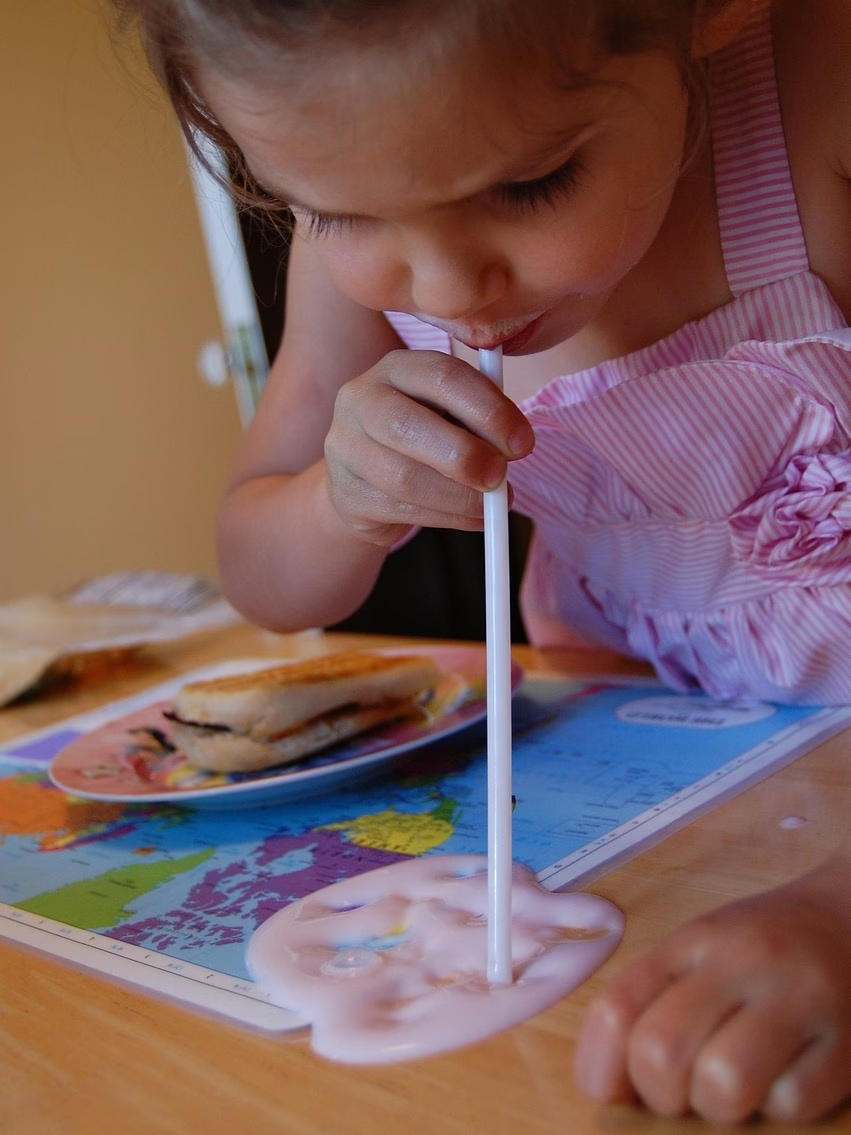
Kids are colossal mess makers. They glory in spilled juice puddles. They dump all their toys into a pile on the far side of the room and then dance on them. Their hands always seem to be slightly sticky, sometimes to the point of attracting lint and cat hair, which is strange because you don’t even have a cat. Crumbs are ubiquitous: in their hair, the corners of their mouth, your pillow. Back in my family child care days, a child finger-painted with the contents of her diaper. That’s something you can’t unsee.
As parents and caregivers, it’s easy to grow frustrated, annoyed, and even angry at the never-ending mess that comes with living or working with young children. At some point, we go into full Mess Prevention Mode. We quit letting them pour their own juice, many of their toys are removed from circulation, and kids are powerwashed before cuddling to remove the stickiness and crumbs.
Mess Prevention Mode might help save our sanity, but it doesn’t really solve the problem. It turns out that making messes is part of the early learning process. Kids need to be mess makers in the early years in order to move beyond the mess as they get older.
Understanding these developmental whys can help us trade frustration for a bit more grace. Let’s dive into five key reasons behind the spills and smears:
Strong Sensory Exploration Drive
Kids are colossal mess makers because they crave sensory experiences.
Imagine thirteen-month-old Naidene plunging both hands into a warm bowl of oatmeal, squishing it between her fingers with gleeful abandon as she shovels it into her mouth. She’s not only feeding herself—she’s also nourishing her busy brain. Such activity hones sensory integration and awareness.
The only way our brains know what’s happening in the world is through our eight sensory systems. Young children are driven to seek sensory experiences to hone their sensory systems and feed their brains.
Immature Small-Muscle Skills
Kids are colossal mess makers because their bodies are still developing.
Naidene will eventually attempt to convey oatmeal into her mouth with a spoon—and it’ll still be gloriously messy. She’ll miss her mouth half the time: oatmeal smeared on her cheeks, tangled in her hair, and somehow mashed into her eyelashes. Those tiny hands and fingers are still building strength, precision, and control. She knows exactly where the food should go, but she doesn’t yet have the refined small-muscle skills to get it there consistently.
Not letting her feed herself would dodge the mess, but it would also rob her of the practice she needs to build those skills, which is exactly what her developing brain and body crave.

Lack of Repeated Practice
Kids are colossal mess makers because they are inexperienced beings in a complex world.
Picture two-year-old Naidene on a breezy summer day: She tosses a handful of fine dirt into the air, watches it swirl, and ends up with a gritty dusting all over her sweet, sweaty face. I imagine that wide-eyed look of surprised curiosity as she repeats the exact same toss five or six times—same result, same gritty surprise—before it clicks that shifting her position might let the wind carry the dirt across the playground instead of back at her.
It turns out there are untold environmental variables—wind, gravity, angles, textures—that contribute to children’s messiness. It takes lots and lots of experience, those repeated tries in the real world, to learn how to manage them. Each messy mishap is data for her growing brain, building the know-how she’ll eventually use without thinking twice.
Limited Focus And Impulse Control
Kids are colossal mess makers because…look, a squirrel!
Think of Naidene finger-painting a rainbow of swirling colors on a large sheet of paper—until the family cat, Miss Whiskers, saunters by. The child scoops the cat into her lap, hoping to bring the friendly beast up to speed on the latest work of art. Escaping the child’s sloppy hands, Miss Whiskers leaps onto the table and finds her paws dampened with red, blue, and green. Then things really get messy.
Young children’s focus is like a butterfly, flitting from one wonder to the next, thanks to an immature prefrontal cortex. This short in-the-moment attention leads to accidental spills, messy play spaces, and the occasional rainbow-splattered tabby. Their impulse control is still maturing, meaning excitement or curiosity often wins over stopping, planning, or anticipating “what happens next?”
Limited Awareness of Social Tidiness Expectations
Kids are colossal mess makers because they don’t know what’s expected of them.
Picture Naidene gleefully emptying the entire bin of blocks onto the floor, planning to build a zoo for her collection of plastic dinosaurs, then zipping off to make tea for her favorite babydoll without a backward glance. She has no concept yet that in polite society, we should pick up after ourselves. Until she understands the social rules around messiness and tidiness, mess is just… neutral.
Once her sensory systems and physical skills develop, she gets some practice, and learns some self-control, she’ll be capable of meeting those social tidiness expectations.
Kids are colossal mess makers Wrap-Up
Naidene keeps growing. By age 10, she can eat pasta in a restaurant without embarrassing everyone at the table. By 16, she’s capable of keeping her room clean. As an adult, her living space is usually tidy—she rarely has oatmeal in her eyelashes.
Early childhood messiness is a stage kids grow through. Knowing the reasons behind the spilled food, dumped blocks, and painted cat doesn’t make them any less annoying or time-consuming to clean up, but it does crack open a window through which you can offer kids—and yourself—some grace.
They’re not tiny tornadoes out to test your patience; they’re hands-on learners trying to figure out how to survive and thrive in the world. As caregivers, extending understanding to these developmental quirks not only eases the frustration but invites us to celebrate the small victories amid the spills.

Contribute content to Playvolution HQ
Brought to you by Explorations Early Learning
Browse Trainings

Post Author

Jeff Johnson is an early learning trainer, podcaster, and author who founded Explorations Early Learning, Playvolution HQ, and Play Haven.
Leave a Reply