
About Unoccupied Play
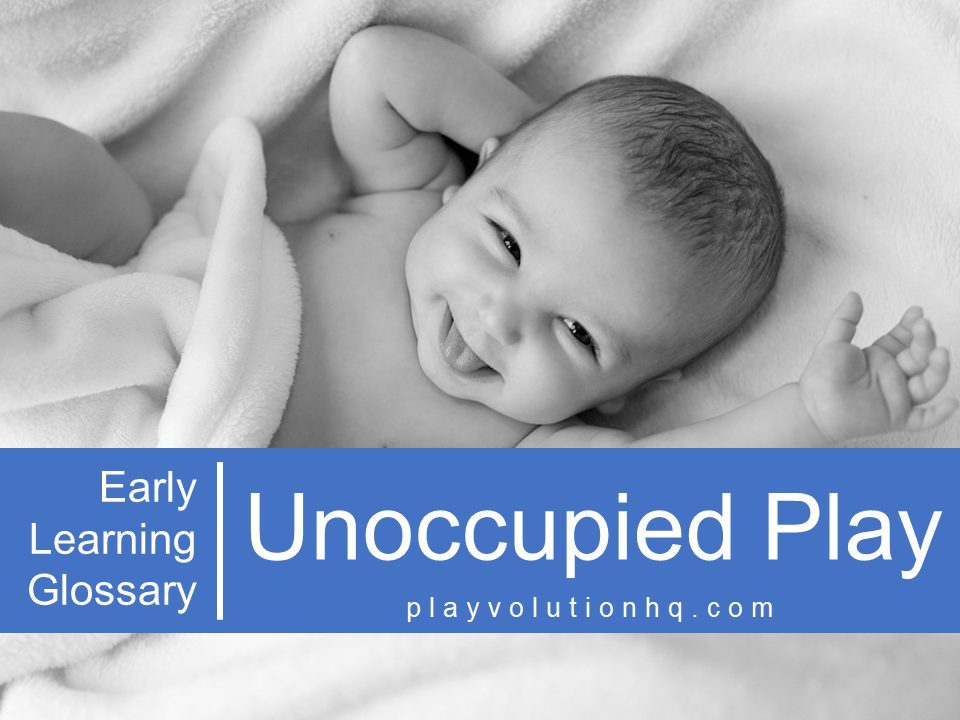
Unoccupied Play is play that lacks social interaction, objectives, and language and tends to take place in the earliest months of life. Children engaged in Unoccupied Play observe their world and move their bodies. Picture an infant happily watching dust particles dance in a sunbeam and kicking her legs, or handling and discarding reachable objects. In this play, the child is exploring their body–how it moves, what it experiences. They are also observing the world around them and understanding that they can interact with it. Don’t forget, at this age everything is new to them.
Such play may seem haphazard, but it serves an important developmental purpose. During this play, the child begins to master their body. For example, they develop strength and muscle control and their visual skills improve. Sensory integration is also a big part of this type of play.
There’s also cognitive development as they begin to understand concepts like object permanence.
This is one of Mildred Parten Newhall’s 6 Stages Of Play. The others include Solitary Play, Onlooker Play, Parallel Play, Associative Play, and Cooperative Play.
Contribute content to Playvolution HQ
Brought to you by Explorations Early Learning
Thoughts On This Entry?
I’d love to hear your thoughts on improving this entry and suggestions for additional glossary additions in the comments below. You can also contact me with comments or concerns.
Browse Trainings


Post Author

Jeff Johnson is an early learning trainer, podcaster, and author who founded Explorations Early Learning, Playvolution HQ, and Play Haven.
Leave a Reply