
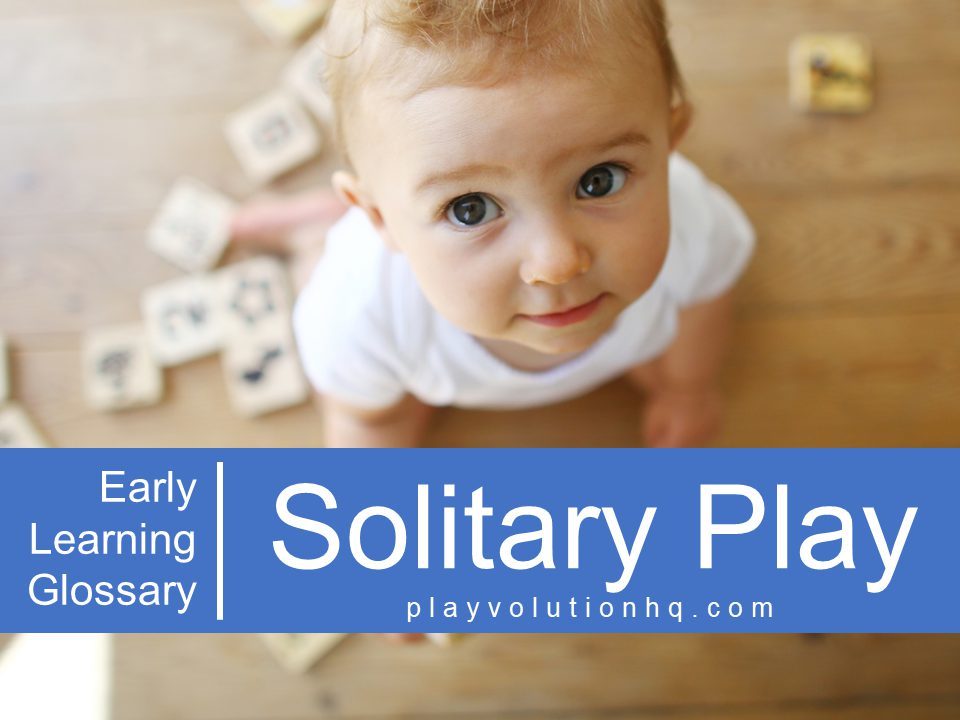
About Solitary Play
In Solitary Play, also known as independent play, a child plays alone with little interest in other children or adults. The child is focused on and content with the activity at hand. Solitary Play is more focused and sustained than Unoccupied Play. Picture a child joyfully banging a wooden spoon on an upturned pan or happily driving a toy car across the floor.
Solitary play is frequently heuristic play, in which the child is enthralled with the exploration of an object or objects. Children engaged in this type of play are not antisocial or lonely, they’re busy in their own heads–thinking, making connections, wiring their sensory systems and more. This stage of play generally lasts from around 3 months to 2.5 years, but older children engage in solitary play as well.
This is one of Mildred Parten Newhall’s 6 Stages Of Play. The others include Unoccupied Play, Onlooker Play, Parallel Play, Associative Play, and Cooperative Play.
Contribute content to Playvolution HQ
Brought to you by Explorations Early Learning
Thoughts On This Entry?
I’d love to hear your thoughts on improving this entry and suggestions for additional glossary additions in the comments below. You can also contact me with comments or concerns.
Browse Trainings


Post Author

Jeff Johnson is an early learning trainer, podcaster, and author who founded Explorations Early Learning, Playvolution HQ, and Play Haven.
Leave a Reply