
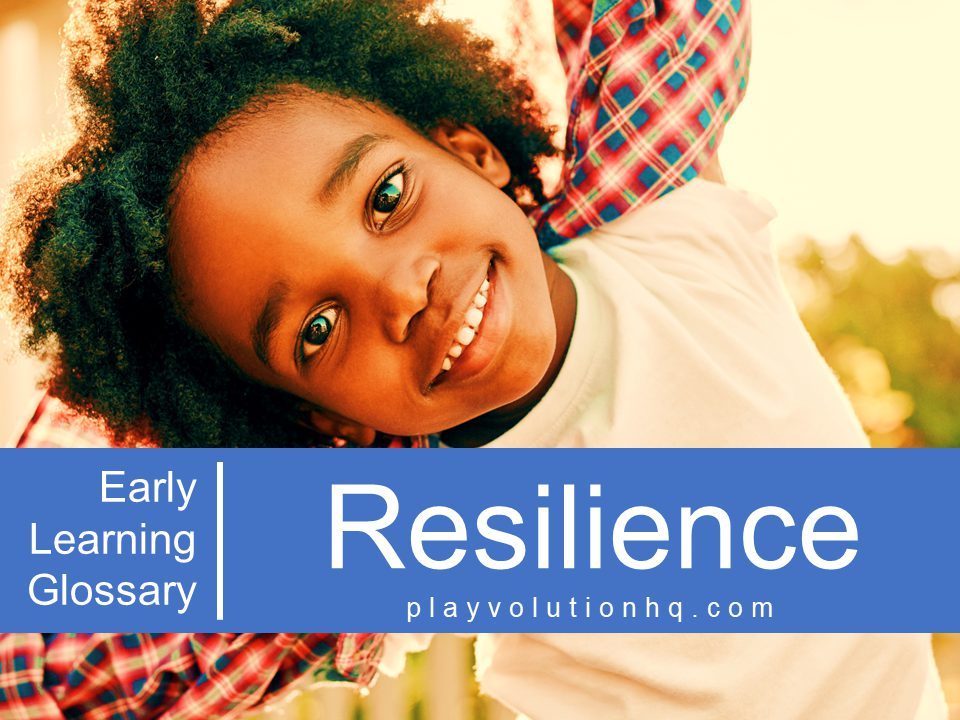
Resilience is the mental and emotional process of managing stress and recovering from difficulties, challenges, trauma, and adversity. Factors such as personal world-view, available social resources, and coping strategies contribute to how one handles adversity. From skinned knees, to the death of a loved one, to prolonged physical and emotional abuse, there’s no end to the situations requiring resilience that life tosses in your path. Since resilient individuals recover faster and more completely from challenging experiences, it is important that young children develop this skill.

Building Resilience
There are many ways to help children build their ability to cope with and recover from life’s challenges. In a Harvard Health Publishing article, Erica H. Lee, PhD shares these five ways to help children learn resilience:
- Aim for warm, nonjudgmental connections
- Practice skills for coping and emotional regulation
- Encourage healthy thinking patterns
- Create meaning and find reasons for hope
- Model healthy coping habits

Pediatrician Dr. Kenneth Ginsburg, specializing in adolescent medicine, has described the seven Cs of resilience. Focusing on them is another way to help children learn resiliency skills. The 7 Cs are:
- Competence
- Confidence
- Connection
- Character
- Contribution
- Coping
- Control
You’ll find related Playvolution HQ content here.
Contribute content to Playvolution HQ
Brought to you by Explorations Early Learning
Thoughts On This Entry?
I’d love to hear your thoughts on improving this entry and suggestions for additional glossary additions in the comments below. You can also contact me with comments or concerns.
Browse Trainings
Post Author

Jeff Johnson is an early learning trainer, podcaster, and author who founded Explorations Early Learning, Playvolution HQ, and Play Haven.
Leave a Reply