

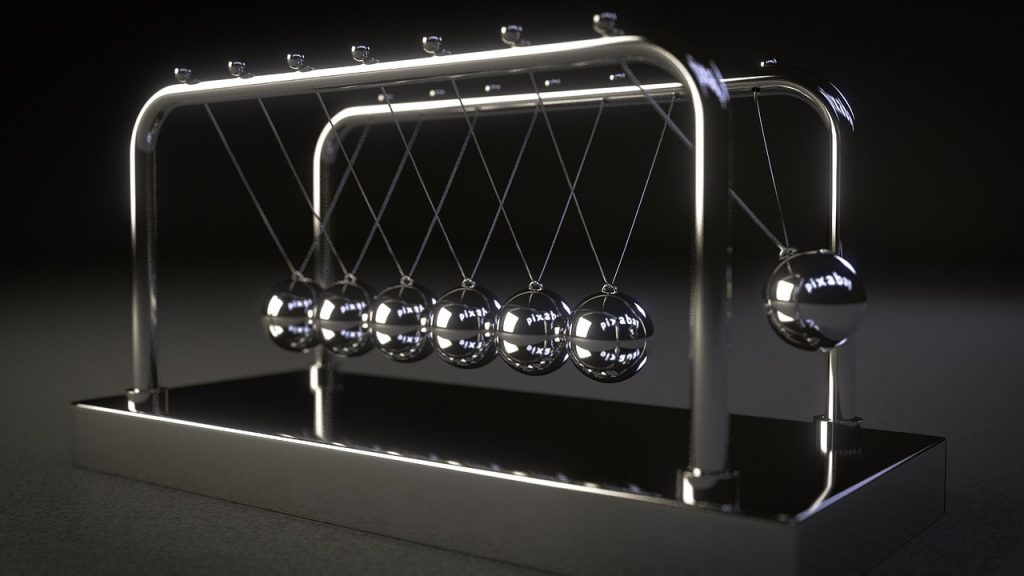
Pendulums, whether a simple string with a weight or a more elaborate apparatus, offer an intriguing opportunity to capture children’s curiosity and stimulate engagement.
Pendulum play involves physical activities like pushing, pulling, releasing, or stopping the pendulum, as well as a lot of mental activity as they brush up against concepts like gravity, motion, oscillation, momentum, time, measurement, and the principles of cause and effect relationships. All of this cogitation results in a whole lot of STEM play and learning.
For many children, the repetitive nature of a pendulum’s swinging provides a soothing effect, contributing to emotional regulation and sensory awareness.
Once kids learn what a pendulum is, they start noticing them out in the world. After introducing pendulum play back in my family child care days, a child rushed in one morning breathlessly reporting that a giant pendulum was knocking down a nearby building. We spent much of the daybwatchingbtge wrecking ball at work.

So, there you have it: pendulums as loose parts not only contribute to physical and cognitive development but also provide a captivating and soothing activity for children in need of soothing.
Plus, it’s super fun to hear young children add the word pendulum to their growing vocabulary.
Pendulums At Play




Contribute content to Playvolution HQ
Brought to you by Explorations Early Learning
Browse Trainings

Post Author

Jeff Johnson is an early learning trainer, podcaster, and author who founded Explorations Early Learning, Playvolution HQ, and Play Haven.
Leave a Reply