
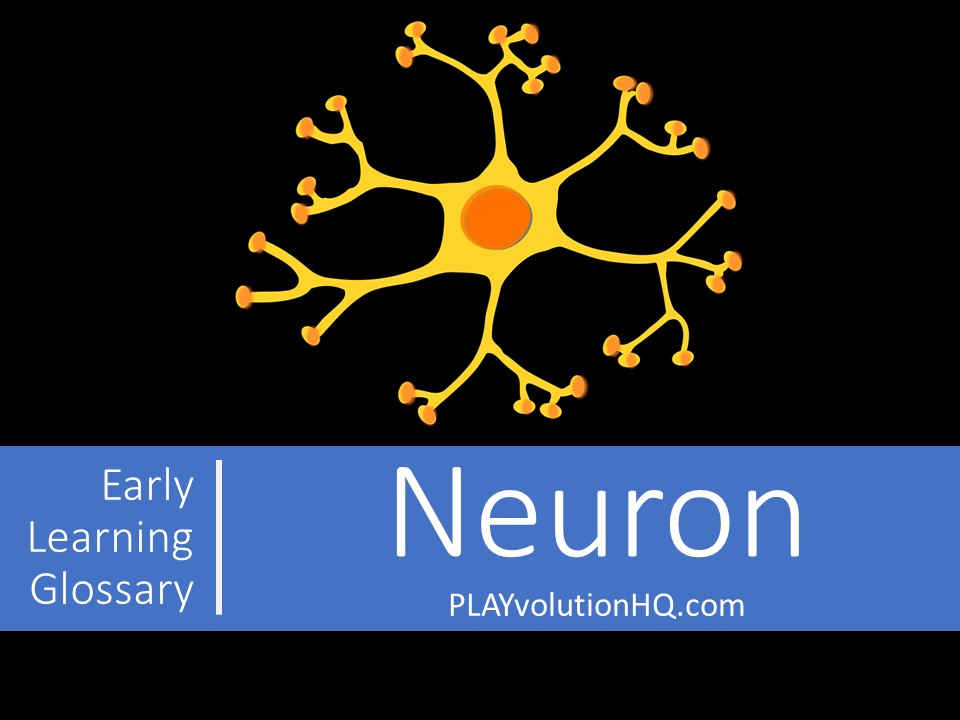
Neurons are specialized brain cells that act as the nervous system’s communication experts, sending electrical impulses and chemical signals to process everything from a child’s first step to their latest question. They work by connecting with each other, forming networks that grow and adapt as kids learn. Imagine them as tiny bridges built and reinforced through play, reading, or solving problems.
Unlike most cells, neurons have unique parts like dendrites and axons to receive and send messages, and while they mostly form early in life, some can even emerge later, supporting lifelong learning. For parents and educators, engaging play and exploration don’t just entertain—they shape the brain’s wiring for thinking and memory.
Anatomy Of A Neuron
Contribute content to Playvolution HQ
Brought to you by Explorations Early Learning
Thoughts On This Entry?
I’d love to hear your thoughts on improving this entry and suggestions for additional glossary additions in the comments below. You can also contact me with comments or concerns.
Browse Trainings

Post Author

Jeff Johnson is an early learning trainer, podcaster, and author who founded Explorations Early Learning, Playvolution HQ, and Play Haven.
Leave a Reply