
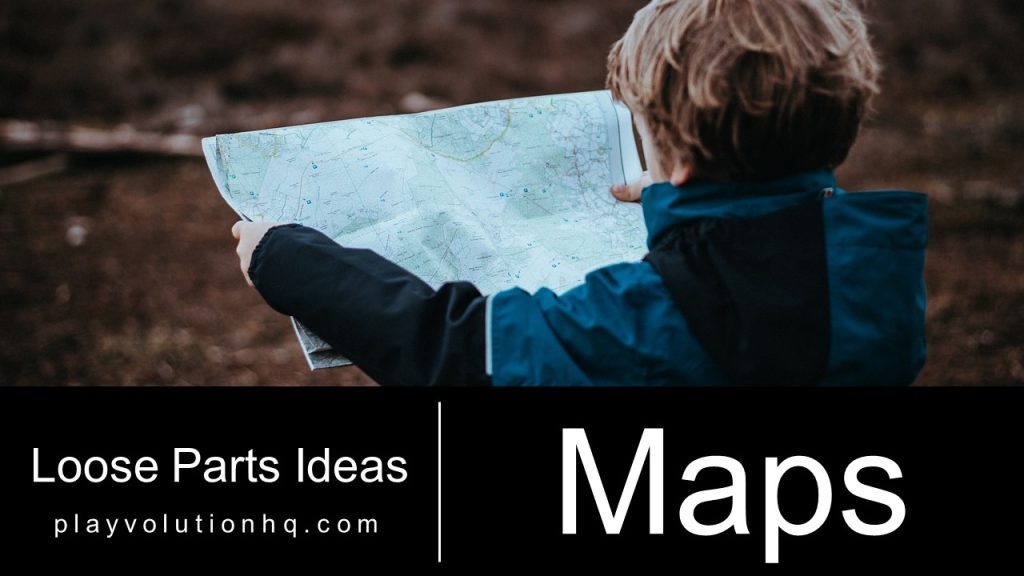
Paper maps are not as omnipresent as they were back in the 70s and 80s when my love of loose parts launched. They can still be found though, and they are still great at sparking playful curiosity, creativity, and maybe even a bit of treasure hunting adventure. Oh, and let’s not forget about the problem-solving and self-regulation skills needed to fold a big old road map.
You can still lay your hands on old-school versions at thrift stores and garage sales and buy update ones online. You can also find all kinds to download and print online. They’re available for bike trails, parks, zoos, amusement parks, museums, and more. Alternatively, you can make your own and provide supplies for kids to make them too.
Maps may inspire some kids to devote hours to scripting their own adventures. This play often involves lots of Power Play and Heavy Work.
Other kids–budding cartographers–may use maps in a more sedentary way–investing big hunks of time in creating their own maps and imagining adventures–or narrating stories based on their creations.
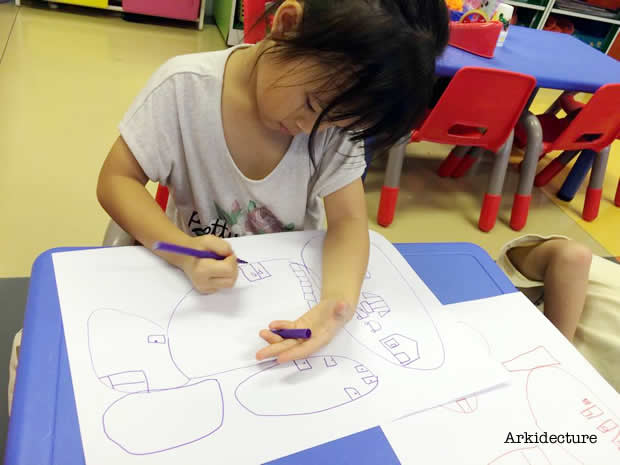
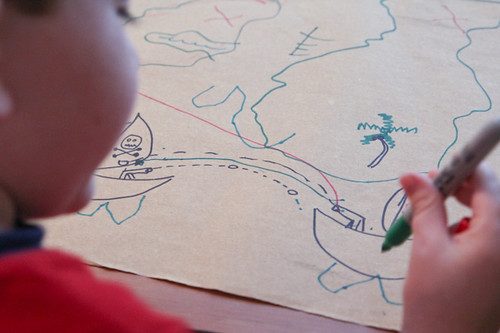
So much potential learning! Map play can lead to development of language, social-emotional, cognitive, and physical skills.
Contribute content to Playvolution HQ
Brought to you by Explorations Early Learning
Browse Trainings

Post Author

Jeff Johnson is an early learning trainer, podcaster, and author who founded Explorations Early Learning, Playvolution HQ, and Play Haven.
Leave a Reply