

Table of Contents
Evidence-based practice is the approach of basing professional decisions and practices on the best available scientific evidence, rather than solely on tradition, opinion, or untested assumptions.
Initially developed in fields such as medicine and social work, evidence-based practice has been adapted to education and early learning to ensure that our methods are grounded in reliable evidence rather than habit or guesswork.
In early learning settings, EBP means making decisions about how we teach and care for young children by thoughtfully combining three key elements:
- Research Evidence—The strongest and most reliable findings from child development studies and educational research
- Practitioner Expertise—The knowledge, insight, and real-world experience of parents, teachers, and early learning professionals
- Cultural Values and Context—The unique needs, preferences, values, and cultural backgrounds of each child and family
When we bring these three components together, we create experiences, routines, and interactions that are far more likely to support children’s healthy growth and development.
Why Evidence-Based Practice Matters in Early Learning
Young children’s brains develop rapidly, and the experiences they have in early years lay the foundation for lifelong learning. Relying on evidence-based approaches ensures that play, routines, and interactions are not only engaging but also developmentally appropriate and effective.
For instance, research supports the value of play in fostering skills such as physical development, problem-solving, social interaction, and emotion regulation. Studies on outdoor play show that it enhances physical health and creativity, whereas rough-and-tumble play can build resilience and self-control when appropriately guided. Without EBP, practices might overlook such insights, potentially missing opportunities to support holistic development.
Examples of Evidence-Based Practice
Here are some examples of EBP in action:
- An evidence-based approach to block play might draw on research indicating that children benefit when block play areas offer greater variety, more time for play, and more space for building.
- Parents at home might support make-believe play, which evidence indicates is linked to enhanced imagination and empathy, by making simple props readily available.
- EBP can also be used in creating program policies and procedures, such as those on screen time limits, drawing on pediatric recommendations to balance technology use with active play.
How to Implement Evidence-Based Practice
Adopting EBP doesn’t require advanced degrees; it starts with curiosity and access to resources. Here are practical steps:
- Stay Informed—Read summaries of child development research from reliable sources, such as academic journals or curated sites focused on early learning.
- Reflect and Adapt—Regularly evaluate your practices—ask what evidence supports them and how they align with children’s needs.
- Collaborate—Discuss with colleagues, parents, or online communities to share insights and expertise.
- Use Tools—Incorporate glossaries, reading lists, or training materials that highlight evidence regarding topics such as power play or death play in children’s exploration.
Challenges may include time constraints or conflicting evidence, but starting small—perhaps by testing one new research-supported play-based activity—can build momentum.
Acknowledging the Pitfalls of Evidence-Based Practice
While Evidence-Based Practice offers a solid framework for supporting children’s development, it’s essential to recognize that not all “evidence” is created equal—and the field has seen its share of well-intentioned but flawed approaches over the years.
Here are some examples of our blind spots:
- Flimsy Research—We often change practice with limited evidence supporting the change. For instance, the 1990s hype around the Mozart Effect suggested that playing classical music to infants could boost intelligence, sparking a wave of baby genius products; however, subsequent research revealed that this was overstated, based on a single, misinterpreted study involving adults.
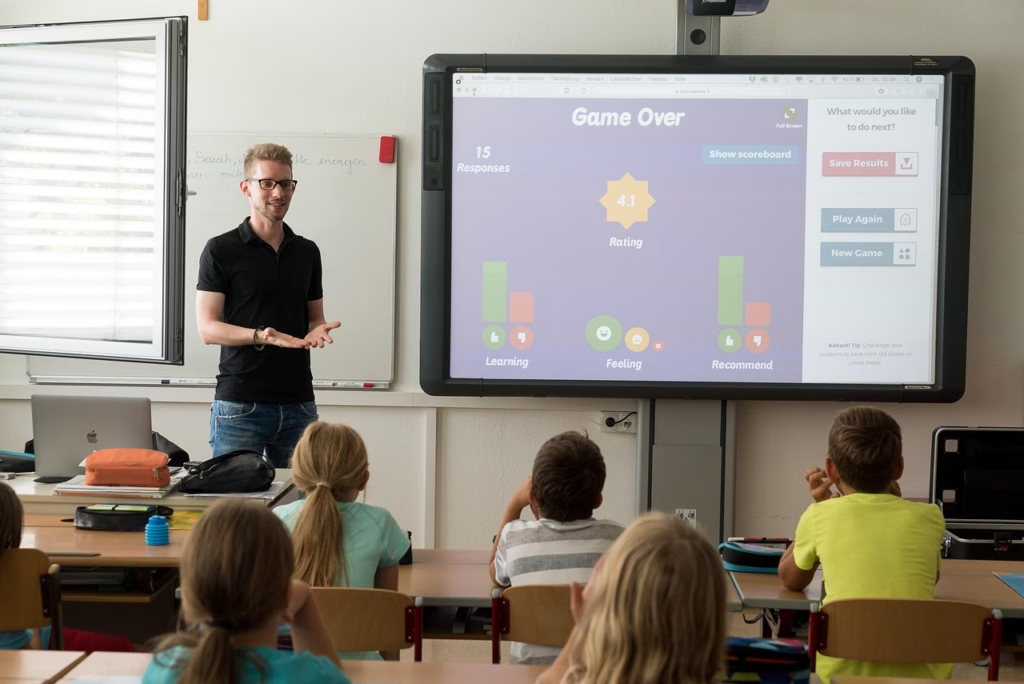
- New Technology—Shiny new tech also seems to catch our eye and change our practices before there is evidence of its efficacy. From the classic 16mm educational films wheeled into classrooms in the 70s to kindergarten smartboards today, educators eagerly embrace technological advances as educational quick-fixes.
- Outdated Practice—Early educators often retain practices long after they are ineffective or harmful. Time Out, for example, is still widely used despite growing evidence that it is punitive and can increase feelings of shame and isolation in young children without addressing underlying behaviors.
We must remain vigilant by critically evaluating sources, seeking replicated studies, and remaining open to evolving research, ensuring that our methods serve children’s best interests rather than clinging to popular but unproven trends.
Wrap-Up
Evidence-Based Practice empowers early learning professionals and parents to make informed decisions that prioritize children’s well-being. By blending solid research with practical wisdom and individual contexts, EBP fosters environments where play and learning thrive.
Contribute content to Playvolution HQ
Brought to you by Explorations Early Learning
Thoughts On This Entry?
I’d love to hear your thoughts on improving this entry and suggestions for additional glossary additions in the comments below. You can also contact me with comments or concerns.
Browse Trainings

Post Author

Jeff Johnson is an early learning trainer, podcaster, and author who founded Explorations Early Learning, Playvolution HQ, and Play Haven.
Leave a Reply