
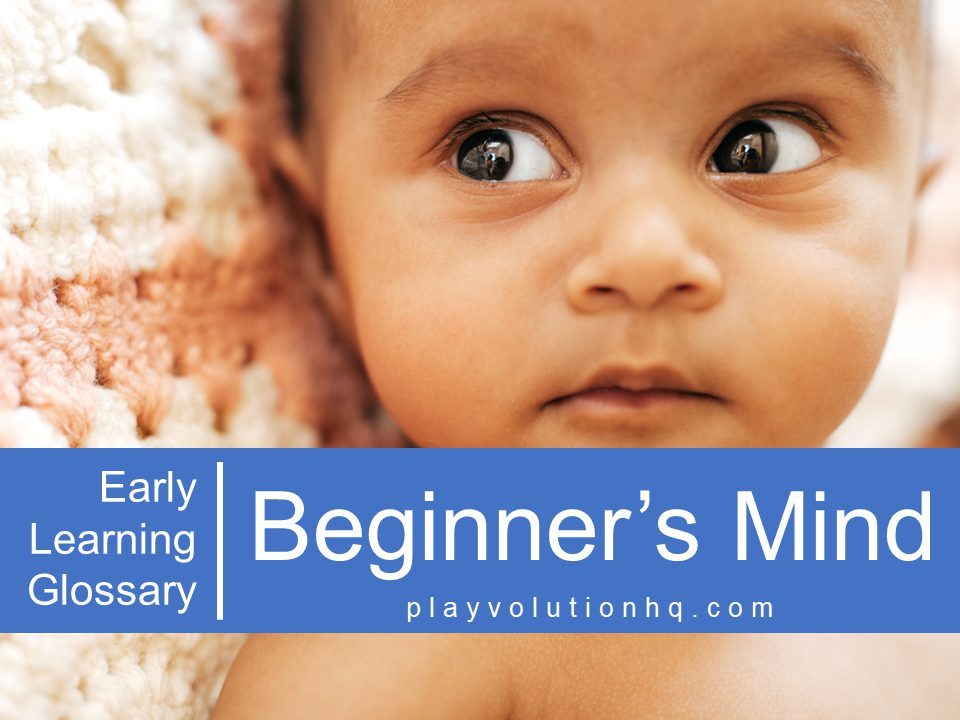
About Beginner’s Mind
The term Beginner’s Mind refers to a paradox: the more you know about a topic, the more likely you’ll close your mind to further learning and investigating the topic. It’s also true that we can lose the wonder and joy of things no longer new to us. For example, if you’ve worked with infants for twenty-three years, the excitement of a child’s first steps may have dimmed for you. We can also get locked in to ways of doing things–how we discipline children, view messy play, or arrange our play spaces, for example.
Olivier Devroede writes, “Beginner’s mind is a way of looking at the world free of prejudice as if it were seen for the first time. The clear advantage of this attitude is that it gives more freedom in how we react toward events.” It’s about trying to see situations with fresh eyes. In doing this, we may find the way we’ve been doing things was the best option. Then again, we may see ways to tweak things and make improvements.

A Final Thought
In some corners of the early learning world, there’s a rush to hurry kids to the next skill or milestone or academic achievement. To push toddlers to be preschoolers, and to rush preschoolers into school. This hurry tromps all over the “this is new to me and I want to learn from it” experience of their beginners mind. We should let kids enjoy the newness of their experiences at their own pace.
Contribute content to Playvolution HQ
Brought to you by Explorations Early Learning
Thoughts On This Entry?
I’d love to hear your thoughts on improving this entry and suggestions for additional glossary additions in the comments below. You can also contact me with comments or concerns.
Browse Trainings
Post Author

Jeff Johnson is an early learning trainer, podcaster, and author who founded Explorations Early Learning, Playvolution HQ, and Play Haven.
Leave a Reply