
Synopsis
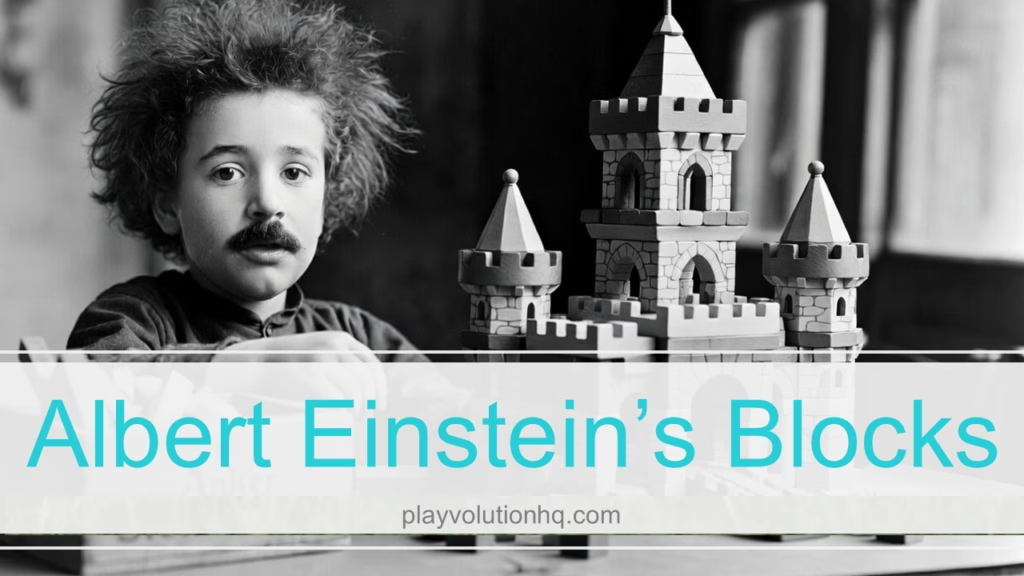
Did you know that even a genius like Albert Einstein owed some of his brilliant ideas to simple childhood play? In this engaging piece from Smithsonian Magazine, published in 2026, the focus is on how Einstein’s early experiences with a set of German building blocks called Anker-Steinbaukasten sparked his imagination and spatial thinking skills. These blocks, made from natural materials like sand, chalk, and linseed oil, weren’t just toys—they were tools for hands-on learning that mirrored the educational philosophy of play-based development. Drawing from historical accounts, including recollections from Einstein’s sister and insights from play historians, the article shows how this open-ended play laid the groundwork for his revolutionary thought experiments in physics.
:focal(1600x960:1601x961)/https://tf-cmsv2-smithsonianmag-media.s3.amazonaws.com/filer_public/5d/ff/5dffa9c0-00d6-4efa-a5b6-2b45a5d3595b/2016_cks_12139_0151_000einstein_albert100946_1.jpg)
Key takeaways:
Today, similar block play is used in early education worldwide to boost problem-solving, resilience, and even architectural skills in both children and adults.
Building with Anker blocks helped Einstein develop visual and spatial reasoning, much like his famous mental images of elevators falling or clocks ticking differently in motion.
The toys encouraged a balance of structure and creativity, teaching concepts like stability and proportion that echoed the complex systems he later explored in science.
Rooted in 19th-century educational ideas from Friedrich Fröbel (the inventor of kindergarten), these blocks highlight how play can prepare kids for serious thinking, influencing modern toys like LEGO.
Article
Here’s the full article:
Contribute content to Playvolution HQ
Brought to you by Explorations Early Learning
Browse Trainings

Post Author

Jeff Johnson is an early learning trainer, podcaster, and author who founded Explorations Early Learning, Playvolution HQ, and Play Haven.
Leave a Reply