
Synopsis
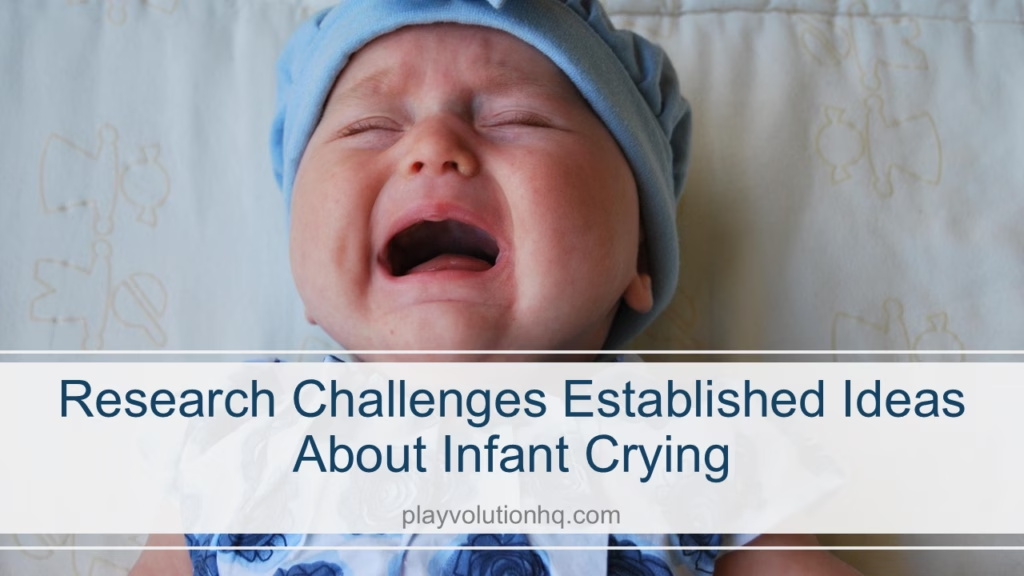
New parents often see the classic “cry curve” graph online—crying peaks around 6 weeks, then drops sharply after 3 months—and feel alarmed when their baby cries well beyond that point.
A 2022 meta-analysis in Child Development (drawing on data from 7,580 infants across 17 countries) offers a more realistic picture. Researchers found that, while crying tends to peak early, it rarely falls as steeply as the 1962 model suggested. For many babies, crying remains a noticeable part of daily life well into the second half of the first year. Patterns also vary widely between babies and between cultures—infants in some non-Western samples cried less than those in English-speaking countries.
This doesn’t mean “excessive crying” is inevitable, but it does mean that ongoing crying after 3–4 months can still be within the normal range. Clinicians and parents can use this updated, broader evidence to set kinder expectations, reduce worry, and focus support where it’s truly needed—rather than comparing a real baby to an outdated graph.
Article
Here’s the article:
https://medicalxpress.com/news/2022-05-ideas-infant.html
If you’d like the primary source, the full open-access paper is here: Vermillet et al. (2022). Crying in the first 12 months of life… Child Development. https://doi.org/10.1111/cdev.13760
Contribute content to Playvolution HQ
Brought to you by Explorations Early Learning
Browse Trainings

Post Author

Jeff Johnson is an early learning trainer, podcaster, and author who founded Explorations Early Learning, Playvolution HQ, and Play Haven.
Leave a Reply