Synopsis
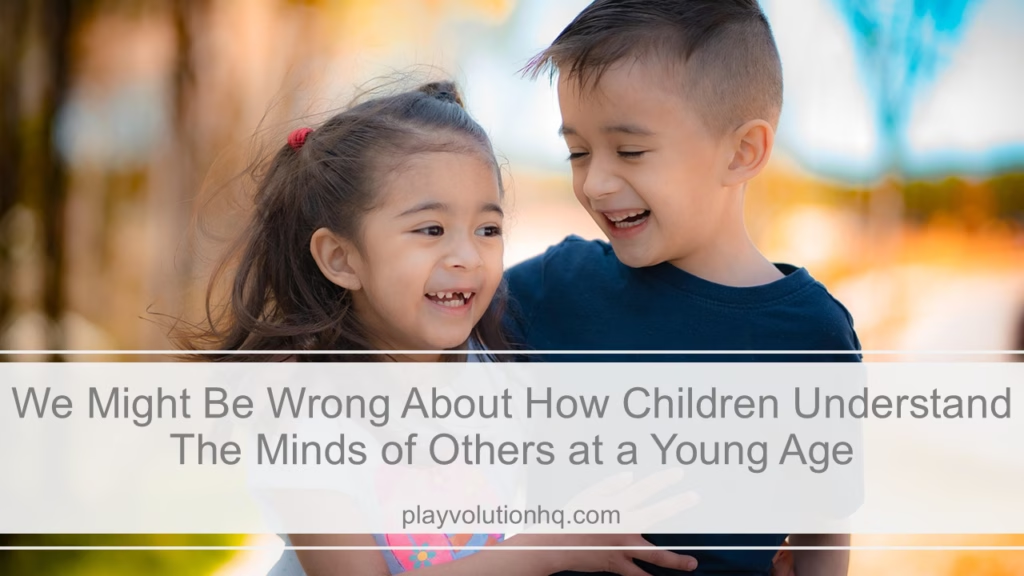
2021 research flips the script on a long-held belief in child development: Instead of preschoolers (ages 4-5) fully understanding that others can hold false beliefs—a key part of “theory of mind”—evidence suggests this ability doesn’t click until around age 6 or 7. Drawing from over a decade of experiments with 580 kids, psychologists at Arizona State University found that younger children rely on simpler “perceptual access reasoning” (like assuming seeing equals knowing in the moment) rather than grasping lasting memories or mental states. This means classic tests, like the Sally-Anne scenario, might overestimate what preschoolers truly comprehend. For educators and parents, it’s a nudge to adjust expectations—lean on kids’ emerging skills to model empathy in play, such as talking through toy-sharing mishaps, and stay curious about evolving science to better support social growth.
Article
Here’s the whole article:
Contribute content to Playvolution HQ
Brought to you by Explorations Early Learning
Browse Trainings

Post Author

Jeff Johnson is an early learning trainer, podcaster, and author who founded Explorations Early Learning, Playvolution HQ, and Play Haven.
Leave a Reply